

-
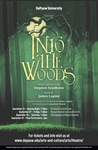
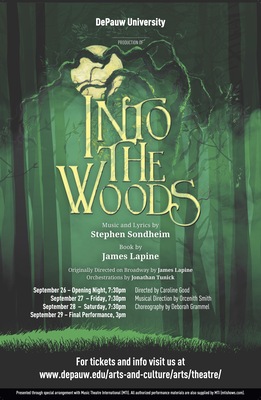
Into the Woods
Fall 2024
As the result of a curse by a once-beautiful witch, a baker and his wife are left childless. Three days before the rise of a blue moon, they venture into an enchanted forest to find the ingredients needed to reverse the spell and restore the witch’s beauty: a milk-white cow, hair as yellow as corn, a blood-red cape, and a slipper of gold. During their journey, they encounter a trove of storybook characters—Cinderella, Little Red Riding Hood, Rapunzel, and Jack—each one on a quest to fulfill a wish, as they chase their deepest desires into the woods. -
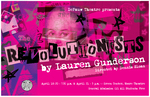
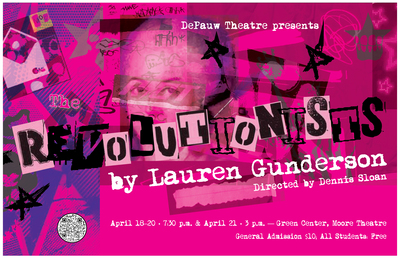
The Revolutionists
Spring 2024
A girl-powered comedy set during the French Revolution's Reign of Terror, following four beautiful, badass women who hang out, murder Marat, and navigate feminism and terrorism in 1793 Paris. -
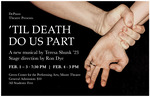
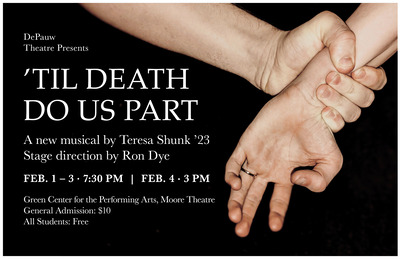
Til Death Do Us Part
Winter 2024
A world premiere workshop production of an original musical about a mother who flees with her young boy to seek sanctuary from an abusive father who is the law in their hometown. -
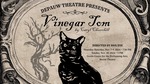
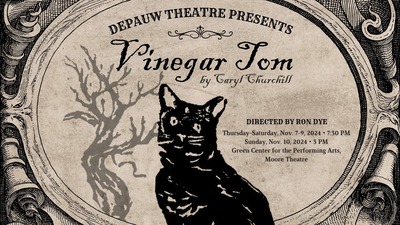
Vinegar Tom by Caryl Churchill
Fall 2024
In a seventeenth century rural village a young woman named Alice takes as a lover a married man who lives on a neighboring farm. After she rebukes another man’s amorous advances both Alice and her widowed mother are accused of witchcraft following their neighbors’ growing family strife and agricultural failures. The two women eventually must submit to the doctors who would cure them as well as to the land speculators who covet their meager farm. Another kindred spirit, a betrothed young daughter of a prosperous landowner, is judged to be insane and is locked away because she doesn’t wish to marry. And in the minds of the local villagers, behind it all is Vinegar Tom, the stealthy cat who is often seen lurking about, boldly plundering barns and milk sheds. Vinegar Tom was written in 1976 by one of Great Britain’s most accomplished contemporary playwrights, Caryl Churchill, in collaboration with the all women’s theatre ensemble Monstrous Regiment. Playwright Churchill has said of her inspiration for the play, “I wanted to write a play about witches with no witches in it; a play not about evil, hysteria and possession by the devil but about poverty, humiliation and prejudice, and how the women accused of witchcraft saw themselves.”
Printing is not supported at the primary Gallery Thumbnail page. Please first navigate to a specific Image before printing.