
Welcome to the DePauw Theatre archives, where we invite you to explore the rich history of our past seasons. From thought-provoking dramas to vibrant musical productions, you can browse through years of student performances and creative milestones below.
-
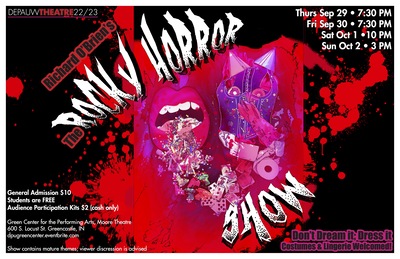
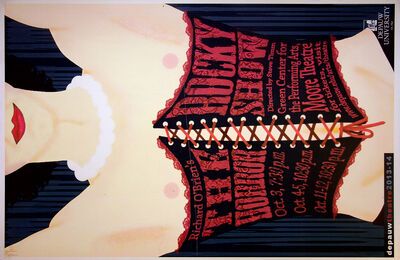
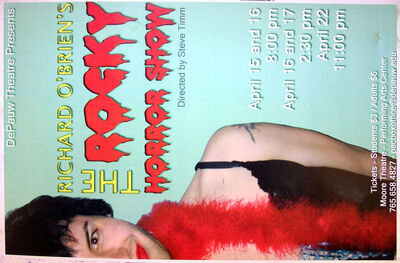
Richard O'Brien's The Rocky Horror Show
Fall 2013
An alien transvestite/mad scientist with a sonic transducer, a ripped monster man, and a castle full of Phantoms and Transylvanians transform wholesome Brad and Janet into liberated sex fiends in Richard O’Brien’s musical celebration of 1950s sci fi movies and rock ‘n roll. The Rocky Horror Show returns to DePauw replete with local musical celebrities and plenty of gratuitous sex and violence! So grab your fishnet stockings and look for special deals on our late night showings. Sexually explicit material may not be appropriate for all audiences. -
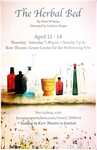
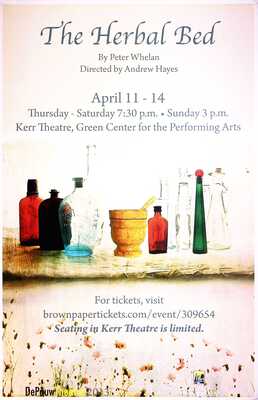
The Herbal Bed
Spring 2013
The Herbal Bed is based on actual events, which occurred in Stratford-upon-Avon in the summer of 1613, when William Shakespeare’s elder daughter, Susanna Hall, was publicly accused of having a sexual liaison with a married neighbor and family friend. The New York Times writes, “… Mr. Whelan is a speculative playwright with a keen sense of history.” London’s The Daily Telegraph states, “Every character comes to life and, although he doesn’t appear, Shakespeare is a powerful presence… He (Whelan) writes beautifully… -
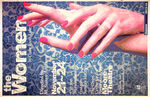
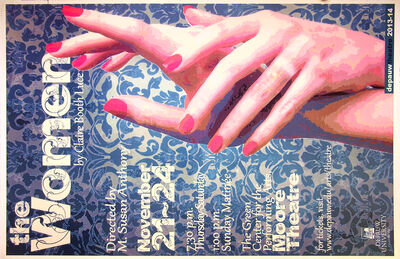
The Women
Fall 2013
Poor Mary Haines. As the pampered wife of wealthy Stephen Haines and a Park Avenue socialite in 1930s New York, she believes that her life is perfect. Mary’s friends, however, inform her that her husband is having an affair with Crystal, a perfume-counter salesgirl. Mary must now deal with her straying husband, his scheming mistress, and Mary’s own circle of “friends,” who offer loud and frequent opinions about what she should do. Written by Luce, playwright, journalist, and congresswoman, The Women is a classic of the American stage. Described as a “wicked comedy,” The Women offers a biting critique of women’s relationships with each other – and prompts spectators to consider the nature of happy marriages and true friends. As the playwright stated, “The women who inspired this play deserved to be smacked across the head with a meat axe, and that, I flatter myself, is exactly what I smacked them with.” – Clare Booth Luce -
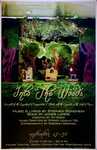
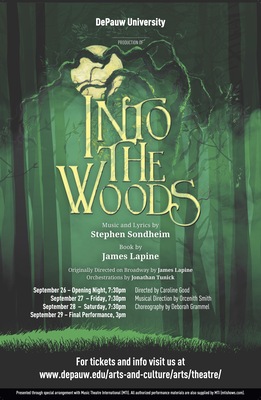
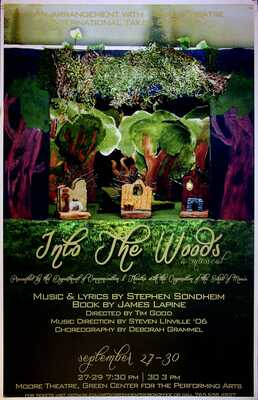
Into the Woods
Fall 2012
Into the Woods starts with familiar fairy tales, such as Little Red Riding Hood and Cinderella, but very soon asks hard questions about the meaning of community, and how we treat each other. Witches can be right; Giants can be good. Supported by a full orchestra, the stirring music of Stephen Sondheim is brought to life to remind us that even though the “woods” are dark and dim, our strength lies in the fact that we all depend on you, me, her and him. -
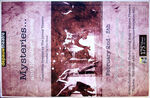
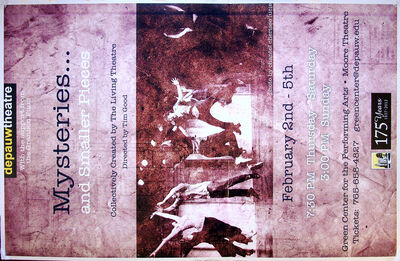
Mysteries ... and Smaller Pieces
Spring 2012
Mysteries ... and Smaller Pieces is a collective creation by The Living Theatre that changed theatrical history. Mysteries is the first play to be presented on the world’s major stages without fictional characters, plot, scenery or costumes. The virtually wordless composition redefines the nature of theater as pure communication between performers and audience. Relying on nonverbal sounds and improvised actions, Mysteries invokes the Dionysian sources of drama, offering the audience the opportunity of assisting in a series of rituals meant to liberate the actor’s deepest resources. -
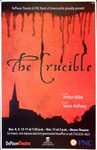
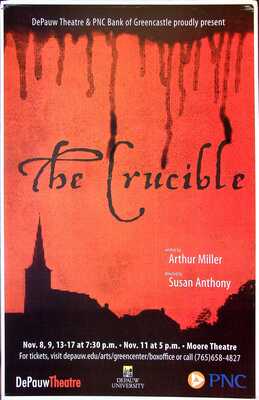
The Crucible
Fall 2012
“I have given you my soul, leave me my name!” cries John Proctor, as he rages against the atrocities occurring at Salem, Massachusetts in 1692. This production will be part of a community-wide conversation centered on the question “What are you willing to put your name to?” Described as a “gripping” and “powerful drama,” this Tony-award winning play depicts a dark time in colonial Massachusetts, when fear and greed incited the persecution of innocents accused of witchcraft. Broadway star and 1958 DePauw University graduate David Cryer will portray the fiery Deputy-Governor in a production of The Crucible at his alma mater in November. Cryer and his wife, choreographer and actress Britt Swanson, will join a cast of students and local actors Larry Sutton (DePauw professor emeritus of communication and theatre) and Jack Randall Earles in the Tony Award-winning play by Arthur Miller. -
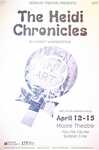
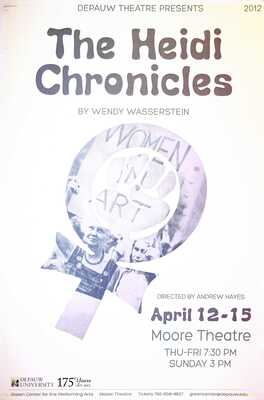
The Heidi Chronicles
Spring 2012
What has the Women’s Movement done for women? The Heidi Chronicles, the 1989 Pulitzer Prize-winning play by Wendy Wasserstein asks this and other questions by tracing the life of a female art historian. Wasserstein’s main character, Heidi Holland, comes of age during the pivotal years of the Women’s Movement. Through her relationships with both men and women, we watch her struggle to determine what women have really gained and at what cost. The play has a wonderful mixture of probing intellectual questions and old-fashioned theatrical humor. Come see what the New York Daily News called, “not just a funny play, but a wise one.”