

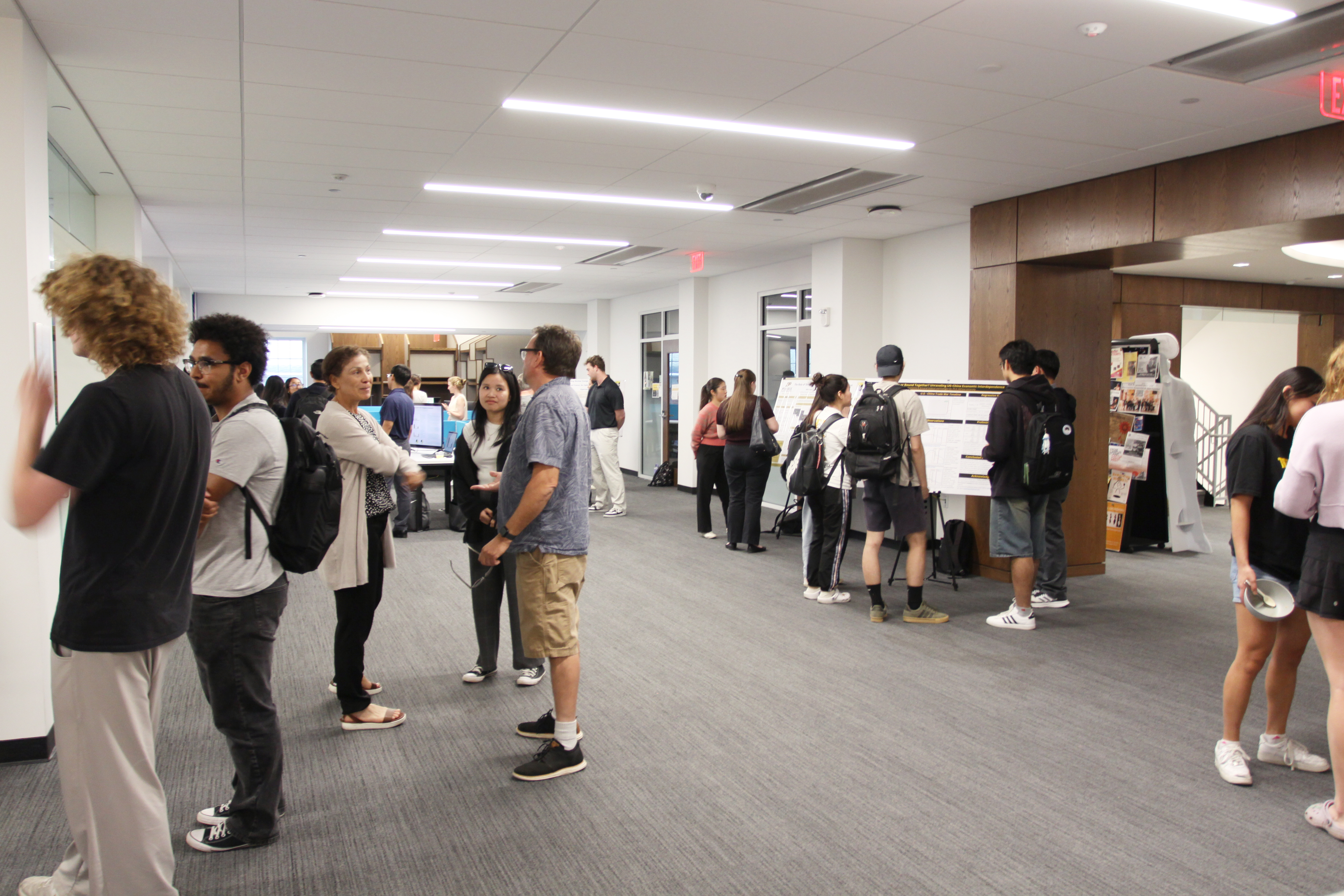
Posters from the annual student research session where DePauw students can demonstrate their collaborative work with faculty or internship experiences.






























































































-

Rivers Reimagined: Floods, Droughts, and the Future of Hydrologic Systems in Aotearoa
Ryan Anderson '26
Hydroelectric power plays a crucial role in New Zealand’s renewable energy system and depends on consistent and reliable rainfall and river flow. This study analyzes hydrologic variability in two Wairoa River catchments in the Northland Region of New Zealand, the Mangahahuru River (Site 46674) and the Kaihu River at Gorge (Site 46611). Over four months, streamflow data provided by the University of Otago, Department of Geography was analyzed using R in RStudio to examine flood frequency, seasonal drought periods, and long-term flow trends. Both catchments were evaluated with approximately 95% completeness. The comparison in flow trends between the rivers highlights differences in flow variability between the two tributaries and demonstrates how catchment characteristics influence river dynamics and water availability. This study provides insight for practicing Mãori sustainable water and land management while balancing hydroelectric energy reliability.
-

Perlecan deopisiton by Sox10+ periocular neural crest cells during early eye development in zebrafish
Daniela Chavez-Corzo '27, Antionette L. Williams, and Brenda L. Bohnsack
The vertebrate eye develops through a series of coordinated events that transform the early optic vesicle into the optic cup, the structure that eventually gives rise to the retina and other essential components of the eye. Proper optic cup morphogenesis depends on precise interactions between developing eye tissues, surrounding cells, and the extracellular matrix. Disruptions in these interactions can interfere with normal eye formation, making it important to better understand the molecular mechanisms that regulate cellular interactions during optic cup formation. The basement membrane is a type of extracellular matrix that provides structural support and helps regulate cell behavior during eye development, specifically in the formation of the optic cup. Previous studies have shown that nidogen, a component of the basement membrane, is expressed by periocular neural crest cells during optic cup development [1]. However, nidogen is only one of many proteins that make up the basement membrane. Therefore, the purpose of this study is to determine which additional basement membrane components are also expressed by neural crest cells during early eye development.
-

Moral Language Analysis and the Archives of Sexuality
Phoenix R. Crane, Calvin Mensel '27, and Claire Collins '28
This project was based primarily in Greencastle, IN, with regular research trips to Indiana University in Bloomington to conduct in-person, archival research at the Kinsey Institute. During these visits, the team explored the Institute’s scholarly collections on sexuality, particularly on subjects related to queer women’s sexuality, criminal trials, and the occult. Extensive notes were taken – recording gender issues and language patterns, specifically. Three promising collections were identified to compare – abortion trials, obscenity trials, and murder trials. Guided by Moral Foundations Theory, differences were hypothesized in how journalists’ language emphasizes the five facets of morality across the three contentious topics. Relevant documents were collected, digitized, and transcribed from the Kinsey Institute and several other newspaper archives (e.g., newspapers.com, Library of Congress, Smith College). Once a total sample of 300 newspaper articles was reached (n= 100 for each topic), Linguistic Inquiry and Word Count (LIWC) software ran word-frequency text analysis, then ANOVA and pairwise comparisons were performed in SPSS. Significant differences were found for several care/harm, loyalty/betrayal, and sanctity/degradation – with some results in the hypothesized directions. These findings indicate how the institute of journalism is a vehicle of moral enculturation in ways that may shape readers’ beliefs and policy positions on morally salient social issues, especially with regards to marginalized populations.
-

Statistical Modeling of Solar Flares During Solar Cycle 24 (2010–2015)
Walae Dahmany '28
Solar flares are energetic events driven by the rapid release of magnetic energy in the solar atmosphere and are an important source of space-weather disturbances. This study examined six years of solar flare activity during Solar Cycle 24 (2010–2015) using GOES X-ray observations and NOAA solar activity data. Flare frequency and intensity were analyzed alongside sunspot number, F10.7 cm radio flux, solar-cycle phase, Hale magnetic classification, previous flare activity, and waiting times between major flares. Statistical methods, including correlation and regression analyses, Cox proportional hazards modeling, and ARIMAX time-series forecasting, were used to investigate relationships between solar conditions and flare behavior. Higher sunspot activity was associated with increased flare frequency, while greater magnetic complexity was associated with stronger flares. Previous flare behavior and waiting time provided more limited information about subsequent flare strength. Forecasting results further demonstrated substantial uncertainty in predicting future flare activity. Overall, the findings show that solar flare behavior is associated with multiple solar and magnetic indicators and that combining these factors provides a more complete understanding of energetic solar events.
-

Dilution-to-Extinction Reveals Shifts in Carbon Substrate Utilization and Functional Capacity Following Soil Microbial Diversity Loss
Thi Doan '27, Uyen Le '27, Crimson Hickman, and Philips Akinwole
Soil microbial communities play critical roles in ecosystem processes such as nutrient cycling and organic matter decomposition, yet it remains unclear how losses in microbial diversity influence these functions independent of total biomass. In this study, we examined how reductions in microbial diversity affect soil metabolic activity while controlling for microbial abundance. We used a dilution-to-extinction approach by inoculating sterilized soil with 10-fold serial dilutions of a soil slurry (10⁰ to 10⁻⁶), followed by a 21-day incubation to allow microbial regrowth. Biomass (measured as phospholipid phosphate), and metabolic activity (measured with BIOLOG EcoPlates) were used to quantify microbial biomass and patterns of carbon utilization. Biomass were similar across all dilution treatments, including 10⁻⁶; however, metabolic activity declined with increasing dilution. Treatments 100 (control) and 10-1 reached higher substrate utilization more quickly, whereas 10⁻⁵ and 10⁻⁶ showed lower overall substrate utilization. Substrate richness decreased from 29 substrates in 10⁰/10⁻¹ to 17 in 10⁻⁵ and to 2 in 10⁻⁶, with parallel declines in Shannon diversity (p < 0.001). These results indicate that recovery of total abundance does not correspond to recovery of ecosystem functional capacity. In addition to overall metabolic activity, patterns of carbon substrate use shifted with decreasing diversity. Canonical variates analysis explained 83.9% of total variation and showed strong separation of sterile and 10⁻⁶ dilution from all treatments, indicating a distinct metabolic profile at the highest dilution. Lower dilutions (10⁰–10⁻¹) were associated with carbohydrate and aromatic substrates (N-acetyl-D-glucosamine, D-galacturonic acid), whereas 10⁻⁶ was characterized by relative enrichment of select carboxylic acids (D-malic acid) and depletion of several carbohydrate and amine utilizers. Heatmap analysis demonstrated progressive loss with dilution: 27 to 31 substrates highly utilized in 10⁰/10⁻¹ but largely absent in 10⁻⁶. Bacterial functional groups present in 10⁻³ and 10⁻⁵ that metabolized carboxylic acids (e.g., D-glucosaminic acid, α-ketobutyric acid), carbohydrates (D,L-α-glycerol phosphate, N-acetyl-D-glucosamine), and amino acids (L-phenylalanine, L-threonine, L-asparagine) were progressively reduced with increasing dilution. At 10⁻⁶, functional groups capable of metabolizing polymers, carbohydrates, and amino acid substrates were largely undetected. Together, these findings support the ecological hypothesis that microbial diversity stabilizes ecosystem functioning by maintaining functional redundancy and expanding metabolic niche space. Diversity loss altered community metabolic profiles even when biomass remained constant, demonstrating partial decoupling between microbial abundance and ecosystem function. This pattern is consistent with biodiversity-ecosystem function theory, where reductions in taxonomic diversity constrain functional capacity despite compensatory population growth of surviving taxa.
-

Role of the Aryl Hydrocarbon Receptor (AhR) in Cellular Response to Novel Chemotherapeutic Compounds
Alexis Fagg '28, Jacoba Hensley '27, and Emma Krsak '28
Breast cancer is the second leading cause of death in women in the United States and around the world, with approximately 320,000 new cases estimated to be diagnosed, and over 40,000 cancer-related deaths estimated in 2026 (American Cancer Society, Key Statistics for Breast Cancer). While cancer treatments have improved significantly in the past decade, particularly in the area of immunotherapy, these therapies are not effective in solid tumors like breast cancer. There are many therapeutic options for early-stage breast cancer, but new therapeutic options continue to be necessary, particularly to prevent progression of cancers and to treat advanced, metastatic tumors. In collaboration with Jeff Hansen in the department of chemistry and biochemistry, we are testing a variety of potential anti-tumor compounds to determine viability as therapies for breast cancer. Previous research has shown that two compounds (referred to here as pyrrolidine and benzylamine) have the ability to restrict cell growth, restrict cell movement, and induce cell death, indicating that they may be good chemotherapeutic compounds. However, we still do not know how they actually work in the cell. One possible mechanism of action is via the Aryl Hydrocarbon Receptor (AhR), a protein in the cell that binds xenobiotics - foreign compounds. This project has two main goals: 1) determine the extent of AhR activation or inhibition in breast cancer cells treated with pyrrolidine or benzylamine; and 2) determine the impact of pyrrolidine and benzylamine compounds on growth and survival of cells with reduced AhR expression.
-

A Summer Under the Big Sky: Environmental Compliance, Response, and Remediation in Montana’s Energy Industry
Cora Gibson '27
During the summer of 2026, I worked as an Environmental Analyst Intern on the Pipelines & Terminals team at CHS, Inc. in Laurel, Montana. I worked across four main sectors of environmental work: compliance, emergency response, remediation, and project management within an industrial setting. I supported projects designed to improve both regulatory compliance and the organization of environmental information across CHS facilities. My primary work responsibilities included creating floating-roof tank inspection documentation to reflect updated regulations and developing terminal-specific Spill Prevention, Control, and Countermeasure (SPCC) inspection forms. I also assisted with multiple emergency-response preparation activities, including oil-spill boom deployment exercises, demonstrating how facilities turn written response plans into actionable methods and practical procedures. In the field, I assisted with a GeoProbe investigation of contaminated soil, gaining exposure to environmental site investigation and remediation practices, from the discovery of contamination and communication with state authorities to considerations of subsurface investigation. Additionally, I helped develop an ArcGIS-based mapping system for spill-response equipment and spill-relevant facilities, enhancing the organization of environmental information so it could be more effectively accessed during planning and response activities. These experiences reflected the interdisciplinary nature of environmental work in the energy industry, where geology, environmental science, engineering, regulation, and project management frequently intersect. My internship strengthened my understanding of how environmental professionals assess risk, maintain compliance, investigate contamination, and prepare facilities to respond to environmental emergencies. Ultimately, this experience strengthened my preparedness and skills in considering the impact of a global industry on local communities and health, reinforcing my interest in pursuing a career that combines environmental geoscience and engineering with applied problem-solving.
-

Exploring the localization and impact of nanoconfined alcohols in the AOT reverse micelle model system
Zoe Green '27, Minjung Lee '27, Gerardo A. Virgen, and Nancy E. Levinger
Most chemical reactions involving water are studied on the bulk scale despite most biological reactions occurring in nanoscopic environments. To understand the complexities of aqueous chemistry occurring in confined spaces, this study utilizes the aerosol OT (AOT) reverse micelle (RM), a well characterized and widely adopted self-assembled model system to investigate nanoconfined water solutions. We introduced an alcohol and carboxylic acid species as molecular additives and found they fundamentally alter the properties of self-assembled systems, changing their size and stability. This work is the starting point for an in-depth study of different carbon length alcohols and carboxylic acids in nanoconfined aqueous environments to establish models researchers utilizing nanoconfined environments.
-

Developing Community Engagement with the Trasimeno Regional Archaeology Project
Rowan Hering '27
The Trasimeno Regional Archaeology Project (TRAP) is based in the territory of Castiglione del Lago, Italy, to the west of Lago Trasimeno. The associated field school is a six-week program managed by the Umbra Institute (Perugia, IT) in collaboration with DePauw faculty (R. Schindler and P. Foss, Department of Classical Studies). Students enrolled in the field school take two classes in archaeological methods and ancient history while also working at the Via Belvedere site. Since starting in 2015, the archaeology project has had three main research goals: mapping the known archaeological sites in the region, excavating particular Roman and Etruscan sites, and developing the archaeology museum based in the town of Castiglione del Lago. The museum works with the Commune di Castiglione del Lago to increase community engagement with TRAP. On display are artifacts from TRAP sites, accompanied by panels and touchscreens that inform visitors about the sites and the archaeological methods used on the project. In the past season, Rowan helped at the site as a trench supervisor, serving as a mentor for new students and maintaining trench documentation. In addition, Rowan worked on three projects related to community outreach, including museum displays, writing an episode for the Umbra Podcast, and working on the digital museum.
-

The Relationship Between Light intensity and Tall Goldenrod Productivity Across Greencastle Fields
Erniya Jean Jacques '29 and Rose Keith
This study investigates the effects of environmental conditions, specifically light availability and climate variation, on the growth and productivity of Solidago altissima (tall goldenrod) across four field sites in Greencastle, Indiana (including sites associated with DePauw University, such as Prindle, Ullem, QA, and NP). By sampling 160 specimens across contrasting light environments (sunny vs. shaded plots) and comparing data between 2024 and 2026, the project evaluates key physical traits including plant height, biomass, and light intensity (μmol). Findings indicate a trade-off in energy allocation: plants in shaded conditions invest more energy into height growth to capture limited sunlight, whereas individuals in sunny environments allocate energy away from height and toward other traits. Ongoing work aims to compare multi-year datasets to assess how broader climatic shifts influence goldenrod productivity over time.
-

A Mineralogical and Geochemical Characterization of the Amo Meteorite
Karinn Johnson '27, Kenneth Brown, Chad Byers, and Thomas Grier
Meteorites provide a wealth of information about solar system evolution, planetary formation and differentiation, and provide clues to the origins of water and life on Earth. On December 10th, 2024 (4:04 EST), a meteor fall was observed approximately 50 km west of Indianapolis, over the small town of Amo, Indiana (Hendricks County). Several pieces of the meteor ranging from about 1g to >60kg were recovered. A local Greencastle, IN resident collected a 1451.3g sample, of which a 7.5g piece was donated to DePauw University for detailed textural, mineralogical, and geochemical characterization using stereomicroscopy, scanning electron microscopy (SEM), energy-dispersive spectroscopy (EDS), and µ-XRF.
Stereomicroscopy on a polished surface of the 7.5g sample has identified significant microfracturing, a thin (< 500µm), partially vesiculated fusion crust, several possible chondrules (~1mm), and a variably thick melt vein (< 50-500µm). Combined SEM/EDS analyses reveal that the sample is composed of anhedral feldspars, olivine, pyroxene, chromite, spinel, apatite, and Fe-bearing phases (possibly kamacite and troilite). Feldspars grains are albitic (avg. Ab84An10Or6; n=14), olivine grains are forsteritic (avg. Fo88; n=7), and there are low-Ca (avg. En87Fs12Wo1; n=4) and high-Ca pyroxenes (En56Fs4Wo40). Although the feldspar compositions are nearly identical to reported Meteoritical Database values (Ab83, An11, Or6; n=53), our measured olivine and pyroxene EDS analyses are more Mg-rich, indicating greater heterogeneity than previously recognized. False-color µ-XRF element maps also reveal considerable textural and mineralogical heterogeneity within the sample along with several notable element correlations (e.g., Fe and Mn; Fe and Ni; W and Hf).
Our observations are consistent with the preliminary Ordinary L5 Chondrite classification reported in the Meteoritical Bulletin database, but also reveal the need for additional detailed mineral-scale investigations to better characterize and understand the heterogeneous composition of this meteorite and place it within established petrological and geochemical frameworks for the L5 chondrite subgroup.
-

Phosphorus Adsorption and Desorption Characteristics on Micronutrient Doped Biochar
Moe Kikuchi '27
The increasing global demand for food necessitates efficient agricultural practices; however, the overuse of phosphorus (P) fertilizers presents a major environmental concern. Advanced materials, including biochar, offer promising strategies for mitigating these effects. Biochar, a carbonaceous material derived from biomass, can be functionalized with micronutrients such as magnesium (Mg) or iron (Fe) to enhance its P adsorption and retention characteristics so that the ion-doped biochar could serve as a sustained nutrient release fertilizer besides improving soil health. This study investigated the adsorption and desorption behavior of dissolved P (200 µM/g and 400 µM/g) in three types of biochars: raw (BC), Mg-doped (MgBC), and Fe- doped (FeBC). Adsorption was performed in near-neutral pH at low ionic strength solution and two cycles of desorption involved NaHCO 3 for anion exchange agent. The suspension was sampled at different time points and biochar was separated followed by filtration and quantification of P using the molybdenum blue method. Post-adsorption biochar samples were analyzed using XPS, ToF-SIMS, and FTIR to assess surface- bound P. UV-Vis spectroscopy data showed that at 200 µM/g concentration, amount of P still retained in biochar after two stages of desorption was 105 µM/g (from 214 µM/g) in BC, 349 µM/g (from 1490 µM/g) in MgBC, and 110 µM/g (from 220 µM/g) in FeBC. Increasing the P concentration to 400 ppm enhanced the adsorption of P on MgBC (by 18%) and FeBC (by 29%), but no change was observed in BC. Analysis of biochar through ToF-SIMS mapping revealed strong spatial correlation between POx species and dopant ions (Fe or Mg), indicating preferential adsorption mechanisms. These findings demonstrate enhanced P adsorption and higher retention during desorption in doped biochars. Since the preferential sorption occurred at dopant ion sites, there is a potential for optimizing adsorption maxima and desorption kinetics with dopants for targeted applications.
-

Ethanol vs. acetic acid in Aerosol OT Reverse micelles
Minjung Lee '27, Zoe Green '27, and Bridget L. Gourley
We explored different behavior of ethanol and acetic acid in reverse micelles by using DLS, Fluorescence, and absorption.
-
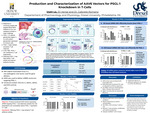
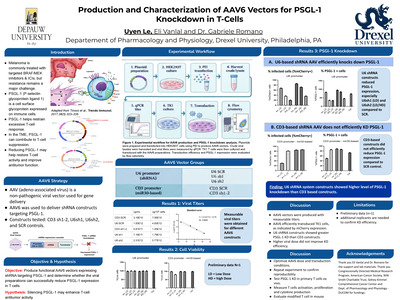
Production and Characterization of AAV6 Vectors for PSGL-1 Knockdown in T Cells
Uyen Le '27, Eli Vanlal, and Gabriele Romano
Melanoma is commonly treated with the combination of targeted therapies and immune checkpoint inhibitors, but treatment resistance or relapse remains a major challenge. P-selectin glycoprotein ligand-1 (PSGL-1) is a cell-surface glycoprotein expressed on immune cells that can suppress T-cell activity within the tumor microenvironment. Silencing PSGL-1 expression may therefore help improve T-cell antitumor function. This project aimed to produce functional adeno-associated virus serotype 6 (AAV6) vectors carrying short hairpin RNA (shRNA) constructs targeting PSGL-1 and to evaluate their ability to reduce PSGL-1 expression in T cells. AAV6 vectors containing U6 or CD3 based shRNA constructs were produced in HEK293T cells using PEI transfection. Viral preparations were then harvested, quantified by qPCR, and used to transduce TK1 T cells. Transduction efficiency, cell viability, and PSGL-1 expression were evaluated by flow cytometry. Measurable viral titers were obtained for all constructs, and AAV6 efficiently transduced TK1 cells as indicated by mCherry expression. Cell viability was generally maintained following transduction. U6 based shRNA constructs produced greater reductions in PSGL-1 expression than the CD3-based constructs, while increasing viral dose did not clearly improve knockdown efficiency. These preliminary results suggesting that AAV6-mediated delivery of U6 shRNA constructs may be a promising strategy for reducing PSGL-1 expression in T cells. Because these results are based on a single experiment, additional replicates are needed to be done to confirm data reproducibility and optimize transduction conditions before evaluating functional effects on T-cell activity.
-

Gall Presence and Herbivory in Goldenrod: Examining Variation in Leaf Damage and Herbivore Communities
Sahit Liyanage '28 and Rose Keith
We examined whether gall presence was associated with herbivory in 28 goldenrod plants at Ullem during summer 2026. We compared 14 galled and 14 ungalled plants for percent leaf damage, herbivore richness, and overall herbivore community composition. Galled plants showed slightly higher leaf damage and herbivore richness, but none of these differences were statistically significant. These results suggest that gall presence alone did not strongly explain variation in herbivory among the plants sampled.
-

Contribution of IL-21-Producing Cells to Metabolic Dysfunction-Associated Steatotic Liver Disease (MASLD) Progression
Jonathan D. Loh '27, Hayde K. Cuervo-Jiminez, Kristin Lampe, and Alzbeta Gordarova
Obesity is a pandemic and represents a major risk factor for the development of metabolic dysfunction-associated steatotic liver disease (MASLD). The lack of effective therapies for MASLD is attributed to limited knowledge of disease etiopathogenesis. The processes that regulate MASLD development and progression are complex and poorly understood. Proinflammatory immune responses are considered a critical causative link between obesity and MASLD pathogenesis. Emerging evidence suggests an important role for innate and adaptive immune cells (e.g., macrophages, NKT cells, and T cells) in the development and progression of MASLD. Furthermore, proinflammatory cytokines produced by these immune cells are directly linked with MASLD pathogenesis. Particularly, interleukin 21 (IL-21), a cytokine produced by CD4+ T cells, CD8+ T cells, and NKT cells with pleiotropic functions, including cellular proliferation, survival, and metabolism, has been associated with MASLD. Meanwhile, the IL-21 receptor (IL-21R) is not exclusively expressed by immune cells (e.g., Kupffer cells, macrophages, NKT, and CD4+ T cells) and is found on adipocytes and endothelial cells. However, despite the apparent biological and clinical significance, the cellular source and targets by which IL-21 promotes MASLD pathogenesis remain unclear and represent a major knowledge gap. Our novel data indicate that: (i) increased circulating levels of IL-21, and increased liver IL21 and IL21R mRNA levels are observed in humans with MASLD compared to metabolically healthy obese and lean counterparts are observed in humans with MASLD compared to metabolically healthy obese and lean counterparts; and (ii) IL-21-/- mice fed a high-fat diet, compared to wild-type controls, exhibit similar weight gain and visceral adiposity but are protected from hepatic steatosis and hepatocellular damage. Further, our characterization of the hepatic IL-21-producing cells revealed that: (iv) the number of IL-21-producing cells progressively increases in the liver of WT mice fed a high-fat diet; (v) hepatic CD4 T cells are the main producers of IL-21 in this setting and they were present in the liver. These findings provide insight into the immunopathogenic mechanism of MASLD progression and will provide the foundation for the development of future therapeutic approaches.
-

An Exploration of Plasticity in Apocynum cannabinum
Mia Moore 28 and Rose Keith
Hemp Dogbane (Apocynum Cannabinum) is a perennial plant native to the United States known for being extremely plastic, meaning its morphological traits adapt to its environment. This study explores how dogbane adapts to microgeographic variance and how its morphological traits are influenced by its genetics vs. the environment. We conducted various experiments over the summer. The first was a large census at the beginning of the summer where we measured several morphological traits of dogbane from the quarry bottom of the DePauw Nature Park (DNP) and various other locations in or adjacent to the DNP. We repeated this census at the end of the summer. We also germinated dogbane seedlings from both the quarry and outside of the quarry and grew them in a common garden to examine genetic variance. Finally, we conducted two studies collecting latex. We collected latex from plants with varying levels of natural herbivory and then we collected latex from plants with varying levels of simulated herbivory (clipping). Over the course of our experiments, we found that several traits varied significantly between environments. We also found that some traits varied between genetic individuals. Further research would include more common garden experiments to continue examining these differences.
-

Investigating the Effects of Novel Hexylamine Compounds on HN6 Carcinoma Cell Survival
Lydia Neven '27 and Dominic Pittman '26
Cancer is a broad term encompassing hundreds of distinct diseases, each arising from unique genetic and environmental factors. Because of this diversity, there is a continual need to develop new chemotherapies. Oral cancer, in particular, remains one of the most common cancers worldwide, yet effective therapeutic options for this malignancy remain limited. Although billions of dollars are invested annually in cancer drug discovery in the United States, the process of evaluating and advancing candidate compounds often represents a critical bottleneck, leading many promising therapies to be abandoned before their full potential is understood. In collaboration with the Hansen lab, we have embarked on a study to characterize candidate molecules developed through diversity-oriented synthesis. To evaluate their potential to move from the lab to the clinic, we sought to identify the in vitro behavior and dose-dependent response of three compounds against HN6, an aggressive oral cancer cell line. We observed rapid accumulation of two fluorescently conjugated compounds, hexylamine-BOPIDY and a hexylamine stereoisomer conjugated to BODIPY. Using both time-lapse and widefield microscopy, we observed rapid and specific accumulation of these compounds in a perinuclear pattern. We compared the anticancer activity of these compounds using a colorimetric viability assay. Both compounds demonstrate potent cellular toxicity, and conjugation with the BODIPY tag enhanced cytotoxic effects over the unconjugated compound.
-

Ranking Stocks in the S&P 500 and NASDAQ-100 Using an Entropy-Weighted TOPSIS Method
Hyeseong Oh '27
This project ranks stocks in the S&P 500 and NASDAQ-100 using TOPSIS, a multi-criteria decision-making method. Instead of relying on a single financial ratio, each stock is scored on ten indicators covering valuation, profitability, cash flow, leverage, growth, efficiency, volatility, and momentum. Weights are set with the entropy method, which gives more weight to indicators that vary more across stocks, so the weights come from the data rather than personal judgment. TOPSIS then measures how close each stock is to a hypothetical best case and how far it is from a worst case. The S&P 500 is analyzed as two separate groups, Financials and Non-Financials, because financial firms often show negative operating cash flow as part of normal business. Mastercard and Visa ranked first and second among Financials, while semiconductor and data storage firms (Micron, Western Digital, NVIDIA, and Seagate) took four of the top five spots among Non-Financials. The rankings describe relative financial strength at one point in time and were not tested against future returns.
-

Shaping the Future Forest Stewardship & Oak Regeneration
Griffin O'Neill '26
My Environmental Fellows practicum began with the everyday work of caring for the DePauw Nature Park. From removing invasive species and maintaining trails to collecting wildlife data and updating signage, I saw firsthand that healthy landscapes don’t sustain themselves; they require consistent attention and stewardship.
As the summer progressed, my work expanded from maintaining the forest to questioning its future. Why are so few oak seedlings making it to adulthood? Exploring this question shifted my perspective. I began to see the forest not just as it exists today, but as something constantly shaped by light, wildlife, and long-term ecological pressures. This practicum ultimately became about more than oaks, it was about understanding how subtle forces determine what a forest will look like decades from now, and what role we play in that outcome.
-

Electrical Characterization of PVDF–BZT-BCT Composite Materials for Energy Storage Applications
Aidana Ospanova '28, Pumpkin Nguyen, Kenneth L. Brown, and Guangjun Qu
This project focused on the synthesis of ceramics and polymer–ceramic composite materials for increasing energy storage density. Over ten weeks, BZT-BCT and CCTO ceramics were synthesized, and more than 50 ceramic and PVDF–ceramic composite samples were prepared with ceramic concentrations ranging from 0.5% to 30% by weight. Different synthesis and film-processing conditions were investigated, including ceramic-to-PVDF ratios, film sizes, temperatures, and hold times. Powder X-ray diffraction (XRD) was used to verify the synthesized ceramic phases. Later in the project, carbon nanotubes (CNTs) and PTFE were incorporated into selected composites, with different CNT concentrations investigated for their effects on energy storage properties. Electrical measurements were conducted using self-built circuits, including a Sawyer–Tower circuit, to characterize the electrical behavior and energy storage performance of the materials.
-

Demonstrating the Value of Community Health Workers Within the Healthcare System
Ashley Padilla '28 and Murthida Salaou
Community Health Workers (CHWs) connect individuals and communities with healthcare systems, resources, and social services. This project examined how CHWs impact patient outcomes, health equity, and healthcare systems through a literature review and qualitative interviews with CHWs at Henry Ford Health. Findings showed that CHWs improve patient outcomes, increase health equity, and provide positive financial impacts. The research also identified the need for greater CHW recognition, reimbursement, and integration within healthcare systems.
-

Investigating the Troost Mineral Collection: Building Partnerships Between Academia and Museums
Gabrielle Pavey '28 and Kenneth L. Brown
Throughout the course of his life, prominent geologist Gerard Troost amassed an impressive collection of around 14,000 meticulously documented mineral and rock specimens. Today, about 6,500 of those reside in the Indiana State Museum where deteriorating labels have caused many to be separated from their original catalog numbers. This study examines a subset of 12 mineral specimens from the Troost mineral collection. To identify the samples and reconnect them to their historical records, we utilized traditional observations and portable X-Ray Fluorescence (pXRF) spectroscopy housed in the Dept. of Geology & Environmental Geoscience at DePauw. Each specimen was accompanied by a label containing a preliminary mineral identification, which we evaluated and, where necessary, revised based on our observations and geochemical analyses. Our work identified mostly sulfide and antimonide minerals, including bournonite, pyrargyrite, tetrahedrite, stibnite, enargite, erythrite, cinnabar, chalcocite, pyrite, arsenopyrite, sphalerite, and jamesonite. Several specimens contain more complex mineral assemblages that also include azurite, quartz, fluorite, wolframite, calcite, and barite. The pXRF analyses provided elemental compositions that helped characterize the specimens and confirm their mineral identities, allowing us to reconnect them to their historical catalog numbers. In a few cases, our results disagreed with the samples original identification, allowing us to provide new information about the samples that will be useful to the Museum's efforts. These findings underscore the importance of preserving and accurately identifying historical geological collections such as the Troost Collection. Beyond safeguarding the legacy of the collection, this work demonstrates how geoscience can reveal the composition, significance, and potential impacts of the Earth materials that shape our world. Collections such as Troost’s provide valuable opportunities for museums and universities to promote geoscience education and public engagement while connecting historical specimens to contemporary issues. Many of the minerals examined contain elements that are important to modern technology or that may pose environmental and public-health concerns, including mercury, arsenic, and antimony. Accurate identification and documentation of these materials therefore not only strengthens the scientific value and accessibility of historical collections but also helps illustrate the relevance of Earth materials to resource use, environmental stewardship, and sustainability.
-

From Beijing to Budapest: Did U.S. Tariffs Rewire Global Value Chains Toward Central and Eastern Europe?
Neli Petric '27 and Guangjun Qu
The main research question guiding our work was whether the U.S.-China trade war, which began in 2018 and has continued through new rounds of tariffs and policy uncertainty, has generated meaningful and lasting economic effects for CEE economies. In addressing this question, we were interested not only in whether trade volumes changed, but also in how the region may be repositioning itself among three major economic partners: the European Union (EU), China, and the United States. We deliberately placed the European Union first in our analysis because CEE economies are geographically, institutionally, and economically part of Europe, even though their degree of integration into the European single market varies across countries. We then examined China, given the earlier development of the Belt and Road Initiative (BRI) and China’s active efforts to expand trade and investment relationships in the region, before turning to the United States and the most recent tariff shocks.
-

School funding allocation and non-beneficiary stakeholders
Ngoc Pham '27, Kavi Thakkar, and Ryan Rudderham
Do non-beneficiaries care about how school districts allocate funding gained from taxes paid by them?