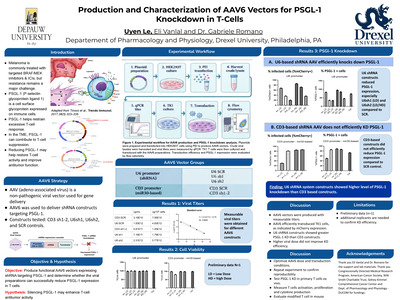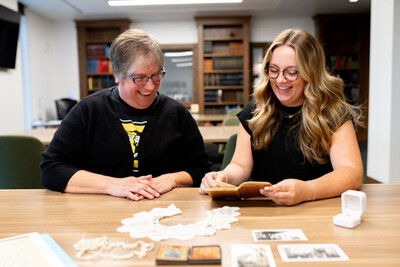

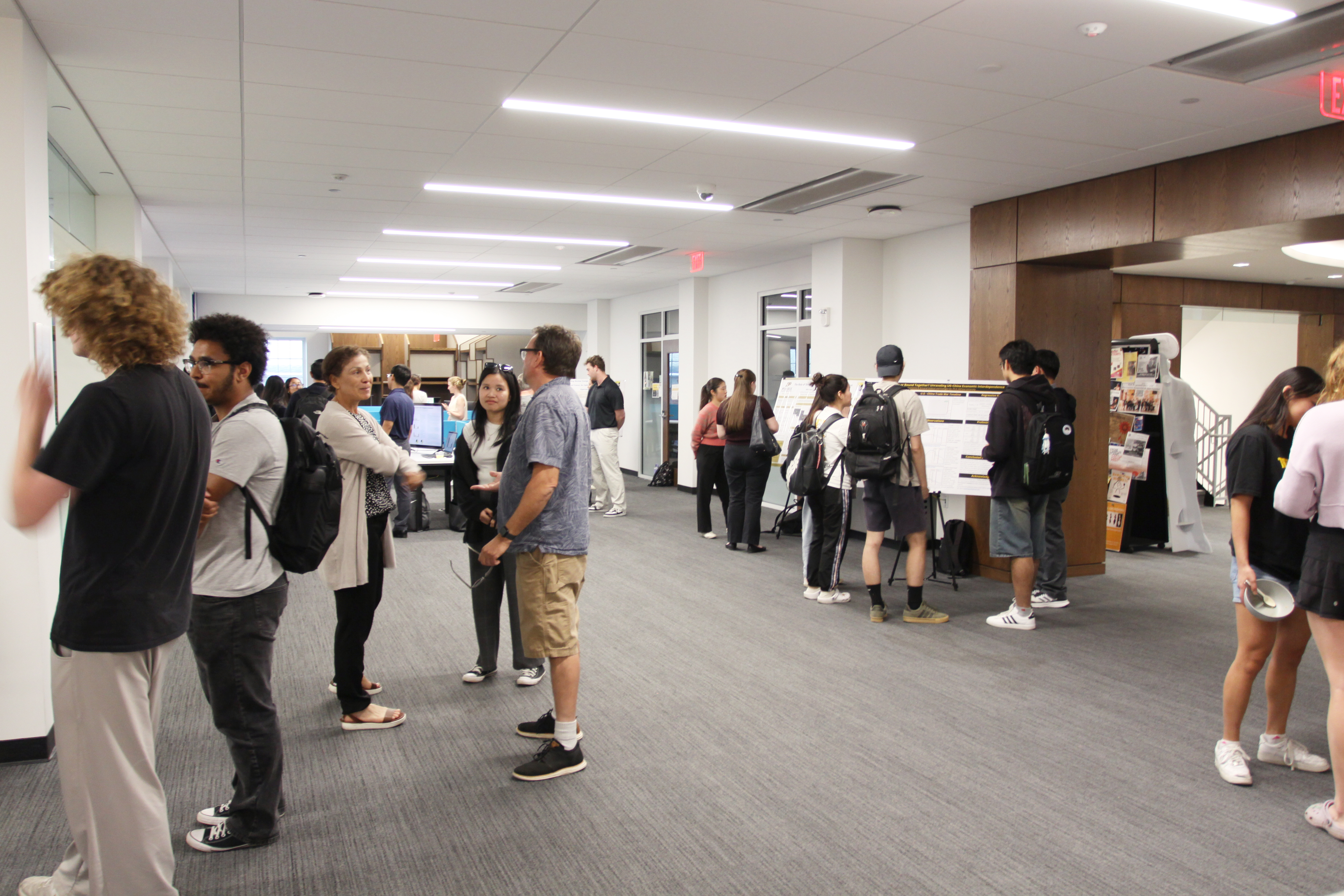
Posters from the annual student research session where DePauw students can demonstrate their collaborative work with faculty or internship experiences.
-

Synthesis of Ether Alcohols with Varying Catalysts
Hannah Grady, Frida Li, and Jeffrey A. Hansen
It has previously been found that acids and bases are effective catalysts in the opening of epoxides into ether alcohols. Our first goal for this summer was to determine which of the acids and bases available were the most effective. After figuring out which of the acids and bases are the optimal catalysts, our second goal was producing ether alcohols in the shortest amount of time with higher yields. Our final goal was to see how biologically reactive the ether alcohols we produced were.
-

Automation of Karl Fischer Titration for Animal Pharmaceutical Product Testing at Elanco Animal Health
Elizabeth L. Grubbs
Ever wonder what doing research looks like in the context of working in industry? This summer I had the opportunity to work at Elanco Animal Health, the world’s third largest animal pharmaceutical company (and growing!) I worked in the Quality Control laboratories where products are tested before they are sent out the door. I did research to automate a process that checks for the water content of various animal health products. The water content of these products is important for many reasons including expiration dates and FDA requirements. The process that I automated is called Karl Fischer titration and is a widely used concept in food science, industry, quality control, and research. A lot of the work I did this summer is proprietary information, meaning that I will not be able to disclose specifics with a general audience in order to protect Elanco from competitors. The research that I was able to accomplish saved the company both time and money. Come see what research looks like in an industry setting!
-

Machine Learning to Support an Interactive Theorem Prover
Salman Haider, Andy Le, Echo Wu, and Brian T. Howard
An Interactive Theorem Prover (ITP) is a computer program that can assist a human in creating a proof of a mathematical theorem or the correctness of a piece of software. At each step in the proof, the human has the computer apply a chosen "tactic" to attempt to make progress toward the goal. We are exploring the possibility of using Machine Learning (ML) to assist in this tactic selection. Building on recent work at UC Berkeley and Princeton, where they adapted the Coq ITP so that it could interface with ML libraries via the Python scripting language, we have been evaluating strategies to encode the current proof state to try to improve the accuracy of tactic prediction.
-

Opening of an Epoxide Ring Using Azide to Form a Triazole
Emily Hufnagel and Jeffrey A. Hansen
The purpose of this research project is to identify and synthesize biologically active compounds that could potentially aid in pharmaceutical research. Once a compound is correctly identified and purified, the sample can be diluted and added to a Brine Shrimp Lethality Assay in order to determine the toxicity of the compound. This experiment was designed using an epoxide compound to form an azide that would eventually form a triazole. In carrying out this project, two main procedures were used in order to create two different compounds that would eventually create the final result. The triazole was not successful in the BSLA and the concentration was not able to be increased due to the solubility of the compound. With further research, the azide compound the azide compound can continue to be utilized in order to create other potentially biologically active compounds.
-

Visualizing the Mean and the Standard Deviation Using R/RStudio Shiny Package
Rachel Hufnagel, Ziyi (Amy) Chen, and Mamunur Rashid
Many of us have experienced an unpleasant situation in which only the mean and the standard deviation of a data set are reported, but we are expected to know everything about the dataset as if those two values were all we needed to know. We would learn so much more if there were easy ways to create and share graphical representations and interpretations of the entire raw data. Here we not only explain what the mean and the standard deviation tell us about a data set, but also describe how to include additional information on the data. We utilize the work of Sarkar and Rashid (2016) that introduced a geometric visualization of the sample mean based on the empirical cumulative distribution function of the raw data. They also extended the idea to visualize measures of spread such as the mean deviation, the root mean square deviation and the standard deviation. Our research involves creating interactive applications of these methods using R/RStudio Shiny, an open source package that provides an elegant and powerful web framework for building web applications. We hope, upon publication of these tools, users all over the world will use such interactive visualization methods for learning, teaching, and building more advanced tools.
-

Acetal Formation from an Alcohol Epoxide
Sarah Kelly
Organic synthesis is the backbone for the discovery of new drugs. The goal of our lab is to create new organic, biologically active compounds to be used in pharmaceutical research. In our lab, we start with the creation of an epoxide molecule that we are able to make in large quantities. Each member of the research team started their reactions with the epoxide molecule and tried to combine it with an active nucleophile. For my experiment, I used an enolate and an enamine to attack the carbon of the epoxide ring. An enolate was generated using a cyclohexaone and kept under certain conditions. 1- pyrrolidino-1-cyclohexene was used as an enamine nucleophile. These two reactions were designed to create an acetal with the epoxide molecule. The chosen nucleophiles did not create the acetal as expected. Further research into the formation of an acetal includes looking into different nucleophiles and the addition of a protecting group.
-
Chronotropic Responses to Cardiomodulatory Agents in the Giant danio Heart
Alyssa Koch and Emma Nelson
The mammalian heart is regulated via both extrinsic and intrinsic nervous plexuses containing both sympathetic and parasympathetic nerve fibers. The physiological responses that are observed in mammalian hearts are facilitated by neurotransmitter and receptors that create either an inhibitory or an excitatory response in the cardiac cells. Previous studies in our lab have shown that the giant danio (D. Malabaricus) can be an important model for the study of cardiac developmental and regeneration. Whether the Giant danio can also serve as a model to study cardiac physiological control is not clear. The purpose of this study was to determine the chronotropic responses in the giant danio heart to various cardiomodulatory pharmacological agents. Using an ex vivo electrophysiological approach, we found that isoproterenol significantly increased heart rate, whereas muscarine and acetylcholine significantly decreased heart rate similar to that seen in mammalian and zebrafish hearts. However, in contrast to zebrafish, we found that treatment with nicotine varied, and did not have significant chronotropic effects. Our findings thus far suggest that cardiac physiology of the GD is comparable to that of mammals, and that the ex vivo GD heart preparation could serve as a model for investigations of comparative cardiac electrophysiology.
-
Droplet Rebound and Rupture
Mason Lee and Alyssa Fisher
Droplets of 1 cst silicone oil, with an initial velocity component tangent to the surface of a bath of the same fluid, will roll along the surface for hundreds of milliseconds, slowing exponentially until eventual coalescence. A rigid vertical wall, placed in the bath perpendicular to the path of the droplet, forces early coalescence either on the meniscus formed on the wall or after rebounding from the wall. By moving the wall along the line of motion of the droplet, a transition point is found in the droplet’s trajectory in which, at a fixed wall position, the droplet may either coalesce within less than one droplet diameters distance from the turning point or travel many droplet diameters. We find a clear bi-modal distribution in droplet travel distance at this transition point and present a physical model to explain this interaction.
-
Pyrrole Reaction Exploration and Development
Mary Leonard
The project “Exploration and Development of Pyrroles” was a subproject within Dr. Jeff Hansen’s research project “Diversity Oriented Synthesis of Biologically Active Compounds”. This specific project was comprised of conducting various organic synthesis reactions using ketone epoxide and several different aniline species all for the purpose of making pyrrole products. The goal for this project was to further investigate the making of several types of pyrrole products as well as learn more about how these reactions occur and how cleanly the reaction could produce pyrrole products depending on the type of aniline used. I also tested to learn if the products were biological activity which could indicate if a compound is pharmaceutically useful. In order to achieve this goal, I reacted several aniline species with ketone epoxide and analyzed the products. In addition, I used a Brine Shrimp Lethality Assay to test the biological activity of the certain pyrrole products. #30-42 OFF CAMPUS EXPERIENCES AND PRACTICUMS =Additional Poster authors but non-DPU related
-
Developing a Digital Simulation For Exploring the Thermodynamics of a Chemical Reaction
Jingwei (Mike) Ling
Shiny is a package used in the R programming environment to develop interactive applications without the need for a background in HTML, CSS, and/or JavaScript coding. Applications are run in a browser either remotely using shinyapps.io as a hosting service, or locally using a computer with R installed. The interactive nature of a Shiny application allows students to explore a (bio)chemical system in a manner that uses active-learning to promote critical thinking in the classroom. Work this summer focused on developing an application for Chem 260 that models the thermodynamic properties of a reaction, allowing students to explore how a change in temperature, enthalpy, entropy, and activation energy affects a reaction’s thermodynamic favorability and the reaction’s rate.
-
A Proton Detector System for Studying UltraCold Neutron Decay
Kristina Mikhailova
The UCNtau experiment is being performed at Los Alamos National Laboratory and has recently produced a sub-second measurement [1] of the neutron lifetime, the average time a free neutron, one that is not contained in an atomic nucleus, will disintegrate into a proton, electron and a third particle known as an electron anti-neutrino. The result confirms other measurements that utilize very slow moving neutrons, described as ultracold neutrons (UCN’s), constrained in a volume and reinforces a disagreement with lifetime measurements produced using a different technique, one employing a cold neutron beam. One of the main differences between the methods is UCN experiments count surviving neutrons while the beam measurements count decay products: protons. A long term goal then is to study the protons from UCN decays which has not been done before and may yield the reason for the discrepancy. We present some initial designs for a proton detector system and evaluate the design of each using a computer simulation of the proton trajectories. We also present some initial analysis of data taken from a detector associated with the small cleaner which removes neutrons with enough energy to escape the trap volume. [1] R.W. Pattie Jr., N.B. Callahan, C. Cude-Woods, E.R. Adamek, L.J. Broussard, S.M. Clayton, S.A. Currie, E.B. Dees, X. Ding, E.M. Engel, D.E. Fellers, W. Fox, P. Geltenbort, K.P. Hickerson, M.A. Hoffbauer, A.T. Holley, A. Komives, C.-Y. Liu, S.W.T. MacDonald, M. Makela, C.L. Morris, J.D. Ortiz, J. Ramsey, D.J. Salvat, A. Saunders, S.J. Seestrom, E.I. Sharapov, S.K. Sjue, Z. Tang, J. Vanderwerp, B. Vogelaar, P.L. Walstrom, Z. Wang, W. Wei, H.L. Weaver, J.W. Wexler, T.L. Womack, A.R. Young, B.A. Zeck, “Measurement of the neutron lifetime using a magneto-gravitational trap and in situ detection,” Science 360, 627-632 (2018).
-
Ground-Dwelling Arthropod Diversity and Composition During Regrowth of Amazonian Swidden-Fallow Land: A Case Study in Northeast Peruvian Amazon (Loreto, Peru)
Claire Mohney
The primary method of rural agriculture in the Peruvian Amazon is swidden-fallow, or shifting cultivation agriculture, which is characterized by forest clearing and crop cultivation followed by a period of regrowth where ecological succession occurs on previous agricultural lands. Some studies have found this type of agriculture to decrease the biodiversity of tropical rainforest landscapes, while other evidence suggests that diversity levels are maintained along different ages of fallow during succession. In this study, I examined the diversity and composition (to the level of order) of litter and ground-dwelling arthropod communities of swidden-fallow agricultural land at various stages of regrowth and in old-growth forests near a community along the Iquitos-Nauta road (Loreto Region) of the Northeastern Peruvian Amazon. Sample sites fell into three land-use categories: chakras (sites of current agricultural use), purmas (fallows, or sites of regrowth), and old-growth forests (not disturbed for agriculture in recent memory). Using pitfall traps and the leaf litter samples, I collected a total of 4,909 individuals belonging to 21 orders. Shannon H diversity indices at the taxonomic level of order did not differ significantly across land cover types, nor depending on time since last disturbance. Pitfall samples from chakras had a significantly different composition than purmas and primary forests (Bray-Curtis Similarity Index), suggesting that chakras may host a unique community composition, although leaf litter samples did not suggest that compositions were significantly different based on land use-type. This data does not support the notion that swidden-fallow agriculture is harmful to arthropod biodiversity at this taxonomic level, in fact, it may even offer a unique habitat opportunity for arthropods. Abouelkheir, Mahmoud
-
Constucting a Magneto-optical Trap (MOT) as a means to Bose- Einstein Condensate (BEC)
Christian Mulmat
This research was focused on the construction of a magneto-optical trap (MOT) to create a Bose-Einstein Condensate (BEC) of 87Rb. The BEC is the coldest of the five states of matter functioning at a minuscule temperature of nanokelvin. A BEC is as close as we can get to absolute zero. Thus making it a valuable tool for researching the fundamental physics of quantum systems. Our setup utilizes both a high pressure and low-pressure MOT. The high-pressure MOT initiates the process with a high vapor density allowing for better Rb collection. The trapped atoms are then transported to the low-pressure MOT where there are no other atoms. Rb atoms are further cooled to a Bose-Einstein condensate temperature and are moved with more current-carrying coils to the glass BEC chamber. In the BEC chamber all Rb atoms are identical at their lowest quantum state. Although the process can be phrased in a few short sentences the setup and characterization of the entire system takes months to years of construction. # 43- 46 Environmental Fellows Program: Student Practicums
-
Developing Digital Simulations For Exploring Michaelis-Menten Enzyme Kinetics
Masayuki (Moon) Nagai
Shiny is a package used in the R programming environment to develop interactive applications without the need for a background in HTML, CSS, and/or JavaScript coding. Applications are run in a browser either remotely using shinyapps.io as a hosting service, or locally using a computer with R installed. The interactive nature of a Shiny application allows students to explore a (bio)chemical system in a manner that uses active-learning to promote critical thinking in the classroom. Work this summer focused on developing an application for Chem 240 that allows students to simulate Michaelis-Menten enzyme kinetic experiments and analyze the resulting data.
-
NeuroVascular Patterning in the Giant Danio (Devario Malabaricus) Heart
Emma Nelson and Alyssa Koch
Neurovascular patterning reveals close association and functional dependence of nerves and vessels in various tissues. In the mammalian heart, intrinsic cardiac nerves work to control cardiac output through modulation of heart rate and stroke. Researchers have theorized that cardiac nerves may guide the development of cardiac vasculature in late larval and early juvenile teleost fish. The extent to which intrinsic cardiac nerves modulate vascular function in zebrafish and giant danio heart is not known. We hypothesize that neurovascular patterning show close spatial correlation between nerves and vessels in fish hearts. For these studies, we developed a method for quantifying the spatial relationship between cardiac nerves and vessels. Our results show first that cardiac innervation in both the giant danio and zebrafish heart precedes the emergence of the coronary vasculature. Second, we found close spatial correlation between nerves and vessels in the atrioventricular junction of the heart where the vessels emerge. Third, close spatial correlation also observed in the adult heart. However, that correlation was seen primarily between cardiac nerves and large cardiac vessels, but not in smaller vessels. Our results support for the notion that larger vessels are directly regulated by cardiac nerves while small vessels are not. Our results in the larval and juvenile hearts support the hypothesis that nerves may provide guidance cues to the developing coronary vasculature, however the mechanism for that guidance is not known. Taken together, these findings suggest that giant danio and zebrafish hearts can serve as an important model to study the role of nerves in coronary vascular development, and in vascular physiology in adult hearts.
-
Acetalization of Amino Alcohols Derived from Ring Opening Reactions of Epoxide
Kaylee Nichols
Epoxides are classified as ethers that contain two partially positive carbon atoms connected to a Lewis-Base oxygen that form a ring. The reaction conditions for forming an epoxide compound from chlorobenzaldehyde and cyclohexanone, and the reaction conditions for opening the epoxide ring using amino alcohols are well-known in Professor Hansen’s lab thanks to previous research. Therefore, the goal of this project was to first open the epoxide ring using an amino alcohol and then form an acetal. The idea was this acetal would then be biologically active, tested using the BSLA, and potentially have pharmaceutical applications. After trying several different reaction conditions, we were unsuccessful in creating the desired acetal product according to NMR results. Further literature research will be done in attempt to find a set of reaction conditions that will result in the formation of the acetal.
-
The Grand Teton Music Festival
Alexandra Phillips and Michaela Wolski
This summer we, along with six other DePauw students, had the opportunity to travel to perform in the Grand Teton Music Festival, one of the most prestigious professional summer festivals in the country. As part of the Utah Symphony Chorus, we first rehearsed in Salt Lake City, UT for four days with our director for both DePauw and the Festival Chorus, Dr. Eric Schmidt. After that, we traveled to Jackson Hole, WY where we performed patriotic songs for the fourth of July, and then two nights of Carl Orff’s famous work, Carmina Burana with world-renowned musicians from all over the globe. The presentation at the poster session will offer insights behind the curtain about what is expected of a professional musician in a large-scale performance on the highest artistic level. This includes aspects of independent study, performance practice, musicianship, and rehearsal etiquette. It also will focus on how we implemented skills we have learned at DePauw. This research project was abundantly educational and an excellent experience for our future paths as musicians.
-
Effect of Sickle Cell Allele on Pediatric Malaria and Mortality
Julia Grace Reinke
Malaria remains one of the most devastating global health issues the world faces, both in terms of mortality and morbidity. In 2017 there were approximately 219 million new cases of Malaria that resulted in an estimated 435,000 deaths. Plasmodium falciparum makes up about 75% of malaria cases and is typically associated with the most severe symptoms is transmitted by the anopheles mosquito. Plasmodium falciparum completes asexual reproduction inside red blood cells. The presence of the sickle cell allele interferes with this reproduction, meaning that individuals that possess the sickle cell trait tend to have less severe symptoms when infected with malaria. Homozygosity for the sickle cell allele is called sickle cell anemia (SS) and can cause difficulties with circulation as well as pain in the extremities and joints. Heterozygosity for the sickle cell allele is known as sickle cell trait (AS) and does not have deleterious effects and the genotype of normal individuals is denoted as AA. Often malaria presents with flu-like symptoms, such as dizziness or fever, but it can progress to severe malaria (SM). This study divides severe malaria into five categories, listed here from most to least severe: cerebral malaria (CM), Respiratory Distress (RD), malaria with complicated seizures (MS), severe malarial anemia (SMA) and Prostration. Pediatric malaria, cerebral malaria, in particular, can cause difficulties in neurological development. This study follows 720 Ugandan Children from the cities of Kampala and Jinja between the ages of 6 months and four years, grouped by the presentation of their severe malaria, as well as community controls. We found that the prevalence of AS was significantly higher in the control group (10.92%) as compared to those with severe malaria (2.05%, p<.001) than those infected with malaria, indicating that it is protective against malaria infection. The mortality rate of AS individuals (25%) was higher than AA individuals (6.63%) and SS individuals(14.29%), though the difference was not significant (p=.057) this result conflicts with several previous studies that indicate the AS genotype had a protective effect against mortality post-infection.
-

Spanish Immersion and Soil Research at the Monteverde Institute in Monteverde, Costa Rica
Donna J. Riner
I traveled to the Monteverde Institute in Costa Rica where I participated in a Spanish immersion program and presented soil research findings to members of the Monteverde community. Presenting my research findings to the community in Spanish helped bridge the language gap between myself and the farmers I worked with.
-
The Identification of Antibiotic Resistance Genes in Soil Environments
Noah Schuster
Antibiotic resistance in pathogenic microorganisms is rapidly developing into a public health crisis requiring immediate attention. The prevalence of antibiotic resistance in microbial communities is growing and becoming more distributed throughout multiple environments. As these distributions continue to increase, surveying the environment for antibiotic resistance is crucial to identify any potential health threats that could become problematic in the future. The soil contains resistant microorganisms that possess valuable genetic information to enhance our basic understanding of antibiotic resistance genes (ARGs) in bacteria. Identifying these genes in resistant soil bacteria can help to build a profile that catalogues the multiple types of antibiotic resistance prevalent in a given environment. This constructed profile could help in determining the existence of any potential threats to a region’s public health. Furthermore, these ARGs can be sequenced to allow for a bioinformatic analysis that could help establish new gene phylogeny and evolutionary patterns.
-
Isolation and Expression of Zebrafish Serotonin Receptor Genes
Aziza Shemet Pitcher
Serotonin functions as a neurotransmitter and neuromodulator in the brain. Cellular signaling mechanisms of serotonin via type 2 serotonin receptors (htr2) have been linked to conditions such as pain, mood, and addiction. Zebrafish represent an excellent model for investigating the development and function of the serotonin neurotransmitter system because of the simple organization of the brain, well characterized behavioral patterns and the availability of tools for studies of genomics. While chemicals that are known to activate serotonin receptor proteins in mammals are used in zebrafish behavioral studies, the pharmacological properties of zebrafish serotonin receptors have not been described. The goal of this project was to develop tools for studying pharmacological properties of zebrafish serotonin receptors such as binding of agonists (activators) and antagonists (inhibitors). Cloning and DNA sequencing of entire coding regions of type 2cl2 and 2b zebrafish serotonin receptor genes was carried out successfully. Deduced amino acid sequence comparison showed a 100% identity with predicted zebrafish serotonin receptors and 55 to 70% identity with mouse and human amino acid sequences. Plasmid DNA (expression vector) that contains cloned coding regions was generated and used to transfect human embryonic kidney cells 293 (HEK293) for the synthesis of zebrafish serotonin receptor proteins. In the future the synthesized type 2cl2 and 2b zebrafish serotonin receptor proteins will be used for radioligand binding studies to determine pharmacological similarities between human, mouse and zebrafish serotonin receptors.
-
Effects of Trifluoroethanol on the Stability and Folding Dynamics on SH3 and ACBP
Amanda Showalter
Protein folding is a complicated process that is typically determined by complex energy landscapes that can be altered by outside factors like temperature, mutation, or the chemical environment surrounding the proteins. Trifluoroethanol or TFE is an organic, colorless, water-miscible alcohol that is used in various chemical, pharmaceutical, and engineering applications. TFE is known for stabilizing protein secondary structure specifically, alpha-helical conformations. Denaturation melts involving TFE were tested on Acyl CoA binding protein, (ACBP) and SH3 protein due to their difference in native secondary structures; ACBP is comprised of mainly alpha helices and SH3 is comprised of mainly beta sheets. These experiments reveal that TFE has a large impact on the thermodynamics of both proteins and possibly leads to a change in the conformation or folding pathways of the two proteins tested.
-
Valuing the Alaskan Wilderness: The 19th Century Writings of John Muir and W.H. Dall
Cecilia Slane and Brown
In the late 19th century, American conservation began to separate into two ideological approaches: scientific and spiritual. Two prominent naturalists, William Healey Dall and John Muir, who both expressed deep admiration for the land they explored during scientific expeditions and personal pilgrimages exemplify the origins of this division. In this project, I am researching how Dall and Muir experienced, valued, and described the Alaskan environment through public essays and personal journals. Using Muir and Dall as key figures, I am investigating how personal motivations inspired their valuing the land as a “wilderness,” a pristine place antithetical to civilization.
-
Optimization of a Workflow for Biological Tissue Imaging and Analysis
Eric Spehlmann
Biomedical imaging for tissue analysis encompasses a range of techniques to represent samples. Biological images provide the basis for the study of histology at the micro and nanoscale level. Brightfield, widefield fluorescence, confocal, apotome, and electron microscopes are used to image tissue, cells and ultrastructural components and to generate single images or image stacks, in formats compatible with various analytical tools. Typically image stacks are digitally segmented using powerful image analysis tool, such as Amira, followed by rendering of 3D models from segmental 2D stacks. However, it is beneficial or crucial that users understand the tissue structure well enough to accurately perform segmentation. Misunderstanding the 2D images can lead to incorrect conclusions and false identification of biological elements. Therefore, we implemented a new workflow, involving the use of Amira for 2D stacks to segmentation, in conjunction with SyGlass for fast rendering of structures in virtual reality. Instead of a linear progression, the workflow using SyGlass allows for concurrent development of an Amira model along with a VR representation that improves the 3D render. Our experience thus far, using a recursive process have allowed for completion of segmentation and reconstruction with greater accuracy.