

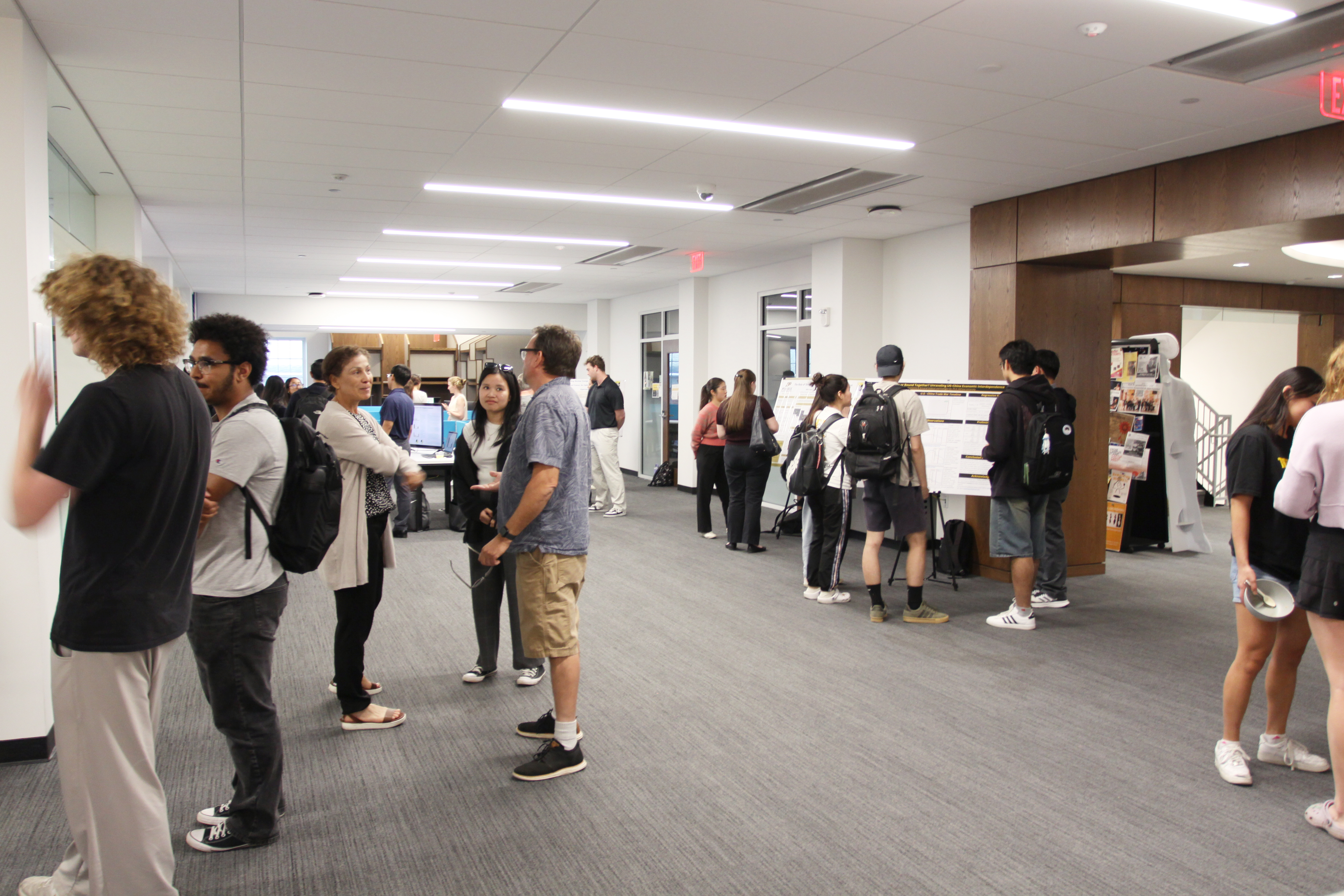
Posters from the annual student research session where DePauw students can demonstrate their collaborative work with faculty or internship experiences.











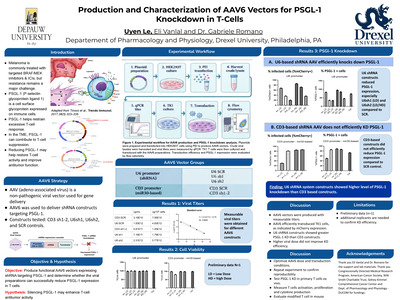
















































































-

Mental Health among College Students during the COVID-19 Pandemic: A Longitudinal Study
Jillian Meyer, Lizzie Bell, and Michael E. Roberts PhD
This research project was a continuation of research conducted in PSY215 Research Methods from the Fall 2020 Semester and subsequently extended in Spring 2021 via Asher funds to collect additional data. The purpose of the research was twofold: conduct a longitudinal study that examines how college students’ mental health has been impacted by the COVID-19 virus from the Fall 2020 semester to the Spring 2021 semester; a second goal was to obtain a racially diverse sample (expanding beyond our initial cross-section) and to also examine factors such as the impact of big vs smaller universities’ administrative responses to COVID-19, and the impact these administrative responses have had on the mental health of college students.
-

Droplet Impact, Part 2: Engineering a Droplet Generator
Nanami Mezaki, Ben Wilkerson, and Jacob Hale PhD
Prior droplet impact research at DePauw used a syringe to pump fluid through a tube to create a droplet. This method generated ~2.5mm diameter droplets with secondary satellite droplets that formed during pinch-off and influenced rupture upon collision with the main droplet. Furthermore, the large diameter caused the droplet to experience significant oscillation as it fell, making it difficult to control impact shape without changing impact velocity. Part of this summer’s research focused on adapting preexisting designs for droplet generators to build our own version that creates small, consistent droplets without interference from satellite droplets or jets (which form at high speeds/large diameters).
-

Big Cities: Air Pollution and Human Health
Natalie Michaels and Naima Shifa PhD
Our project explores the growing issue of air pollution on urban environments throughout the United States. Through the use of the County Health Rankings data set, we investigated the connection amongst air pollution, health outcomes, and other socioeconomic and environmental risk factors.
-

Eye-tracking Study: Systematic Effects of Task Instructions on Selective Attention and Inductive Learning
Kumiko Nakajima, Olivia Dickinson, and Michael E. Roberts PhD
Participants studied paintings with respective task instructions and were subsequently tested on identification performance for trained paintings as well as new paintings by the same artists. Eye tracking analyses indicate that each task instruction led to distinctive fixation patterns for the paintings, which may influence inductive learning performance. Generally, participants given the alternative pattern of the instructions performed significantly better than those who received the successive pattern of instructions both in trained and new paintings.
-

Resilience of Transportation Systems to Disasters
Nangga (Ga Nan) Oirat and Suman Balasubramanian PhD
We used graph theory's centrality measures to process the resiliency of rail stations in India. Centrality measures are the principles of processing, while Python is the tool of processing.
-

Numerical Approaches of Pricing European Options in The Cox-Ross-Rubenstein Models
Hai Phan and Seonguk Kim PhD
The Cox-Ross-Rubinstein (CRR) market mode is used to price European and American Options without complex elements, including dividends, stocks, and stock indexes paying a continuous dividend yield, futures, and currency options. The model is an elegant, simple, but strong model to explain the general economic intuition behind option pricing and its principal techniques. In the paper, the CRR model's numerical elements and equations are indicated, and a practical event is examined to demonstrate the application of the model in the financial market. To make it easier to understand, figures, including tables and graphs, are also included to visualize and simplify the model and output data.
-

Born to run? Vegetative spread of the invasive plant Phragmites australis via stolons (runners)
Daniel L. Saltz and Dana Dudle PhD
Phragmites australis is a highly invasive wetland grass species that dominates nearly any ecosystem that it invades, this is due to its incredibly dense foliage which makes it hard for plants and animals to live in the vicinity of phragmites. Phragmites can grow in versatile environments and are extremely durable. Therefore, once phragmites establish itself, it is very difficult to remove it. On top of that, Phragmites spreads very quickly by utilizing both sexual and asexual reproduction.
-

Dogbane Under Stress: Habitat Differentiation of Anthocyanins in Apocynum cannabinum
Marie Spehlmann '22 and Rose Keith PhD
The quarry in DePauw’s Nature Park, which was previously stripped of soil and layers of bedrock, offers an ideal study system for understanding how plants adapt to disturbances. The quarry bottom is particularly stressful for plants because of this loss in soil, high variability in water availability due to the poor porosity of the bedrock, and high light intensity. Therefore, plants that live there must have traits suitable for this harsh environment. One response elicited to stress in plants is the production of red pigments called anthocyanins. Anthocyanins are versatile and have been found to be protective in a multitude of ways; among their many functions, they have been shown to protect against tissue damage at high light levels and increase herbivore resistance. Using Hemp Dogbane, Apocynum cannabinum, as a study system, we asked whether anthocyanin content in stems differs between quarry and non quarry environments, if there is a relationship between pigmentation and herbivory, and how pigmentation is selected on in the two habitats.
-

Voxelwise Mapping of Whole-Exome Sequencing to Noninvasive Imaging with Stereotactic Localization and Deep Learning
Katherine Stanley
Tumor heterogeneity presents a significant barrier to glioblastoma treatment. While multiparametric imaging can improve characterization of such heterogeneity, advances have been limited by access to ground truth pathology and genomics. Stereotactic localization addresses the former issue, allowing pairing of biopsy location with corresponding voxels in MR image. Using stereotactic localization, as well as voxelwise MR image analysis, a feedforward dense network, and whole-exome sequencing, the authors sought to improve multiparametric MR characterization of tumor heterogeneity.
-

Diversity Oriented Synthesis of Sulfur Containing Epoxide Compounds
Monica Stefaniak and Jeff Hansen PhD
Diversity oriented synthesis is a drug discovery approach that allows the creation of a wide variety of new compounds that can each have exciting new characteristics. Previous research involving the opening of epoxide rings with amine groups has shown promising results with regards to bioactivity. Our research involved finding a simple procedure to open the epoxide ring using various thiol groups such as octanethiol, hexanethiol, and benzenethiol. We are hoping to develop a library of new sulfur containing compounds that show promising characteristics, such as pharmacological activity. In our project, we synthesized multiple new sulfur containing compounds and verified their structures using 1D and 2D NMR spectroscopy. In the future we are hoping to develop easier and more efficient methods to open epoxide rings and use more complex thiols that show interesting activity.
-

Diversity Oriented Synthesis of Furan Epoxide
Yuhui Wei and Jeff Hansen PhD
In this project, we are doing the Diversity Oriented Synthesis of Furan Epoxide. There are two main reactions we are trying to accomplish with the epoxide which are the Achmatowicz reaction with the furan ring, and the epoxide ring opening reaction with amine. During this summer, we are able to make the amino alcohol and the Achmatowicz product has been made from the previous semester. We were also trying to get Achmatowicz reaction happening with the amino alcohol product. However, the result doesn't show the expected structure and still needs further research. Besides organic chemistry synthesis, we also tested the bioactivity of our amino alcohol product since it was similar to another bioactive structure. We did both the Brian Shrimp Lethality Assay with our amino alcohol product.
-

Droplet Impact, Part 1: Controlling Skirting Velocity
Ben Wilkerson, Nanami Mezaki, and Jacob Hale PhD
Droplet skirting occurs when a fluid droplet rolls over a bath of the same fluid without merging. To achieve skirting, we introduced a ~0.6 mm-diameter droplet of 1 cSt silicone oil into a bath of the same fluid by bouncing it off an angled glass slide coated with 100,000 cSt silicone oil. Our work suggests that initial skirting velocity increases as a function of slide angle and, to a lesser degree, droplet generator height. Furthermore, we conclude that the droplet lifetimes (initiation of skirting until rupture) and corresponding �� values (rate of decay of motion) appear consistent with theoretical predictions for such droplets based on previous research (which did not address >0.75 mm-diameter droplets.
-

Analysis of Dynamical Systems for Synthesis of Phenobarbital
Mishal Ali
The use of mathematical methods for the analysis of chemical reaction systems is one of the useful tools. Phenobarbital (a barbiturate type medication also called phenobarb) is a prescription drug used to control seizures, relieve anxiety, treat epilepsy (in some countries), and prevent withdrawal symptoms in people dependent on other barbiture drugs. We approaches it with matrix analysis and ODE system. It helps us understand the chemical stoichiometry of these synthesis reactions.
Supervisor: Prof. Seonguk Kim, PhD
-

A Preliminary Look into Regional Primary Succession in the DePauw University Nature Park Quarry
Sophia Atkinson, Diana Borse, and Dana Dudle
Quarries are anthropogenic landscapes that when abandoned, leave a blank slate in the environment for species to come in and repopulate the area. This gives way to primary succession, a process that re-vegetates areas devoid of soil. The goal of this research is to investigate where the abandoned limestone quarry at the DePauw University Nature Park is in terms of its successional phase since extraction stopped in 1977. Throughout the summer of 2020, plant species were identified along with the specific region and sub-habitat, the main sub-habitats being the temporary ponds, quarry spoils, talus slopes, flat limestone areas, and damp or low spots. Other information including plant form, life history, native and wetland status, and invasive rank was recorded for each species using the USDA website. Of the 98 species collected, 73% are native plants. Of the 27 non-native species, 7 have been identified as highly invasive, 2 are medium, and 1 is low. Nineteen of the 75 species with labeled wetland statuses are commonly found in wetlands, having facultative wetland and obligate wetland statuses. The majority of the species we identified are herbaceous in plant form and have perennial life history. According to an article by Girardelli et al. (2016) regarding assigning successional phases in limestone quarries, an area undergoing primary succession that is dominated by perennials is indicative of late phase succession while shrubs tend to replace herbaceous plants in later phases of succession. While the majority of the species are native, herbaceous, perennials, and have a facultative upland status, we do not yet know whether these species are representative of the total coverage on the quarry bottom. Moving forward with this information, a pilot study has been started as a basis for my research in the fall semester that will estimate species diversity in the quarry bottom as well as relate species diversity and composition to abiotic conditions.
-

A Comparison of Invasive and Native Plants in an Abandoned Limestone Quarry
Diana Borse, Sophia Atkinson, and Dana Dudle
The abandoned limestone quarry in the DePauw Nature Park is a site of interest for research into plant community establishment due to the harsh, heterogenous, and fluctuating environment. Because the limestone floor of the quarry is a novel anthropogenic environment, every plant species in the quarry had to be introduced somehow. Perhaps native species that are able to establish populations in the quarry are more likely to share traits with invasive species. Using information collected from scientific articles, I compared traits of three pairs of plants with similar forms to compare their life history traits to see if any patterns emerge. I compared Erigeron annuus (native) to Pilosella caespitosa (invasive), Celastrus scandens (native) to Rosa multiflora (invasive), and Phragmites australis to Typha angustifolia which are both invasive, but Phragmites is more prevalent in the quarry. All six species exhibited traits that are associated with invasiveness. They all can reproduce asexually. All but two of the species have seeds that are wind dispersed. Rosa multiflora is the only one that lacks multiple distinct means of seed dispersal. Lastly, four of the species have high genetic and/or phenotypic plasticity. The initial comparisons indicate that species that establish on the quarry floor tend to exhibit traits associated with invasiveness, regardless of whether those species are native to Indiana. Future empirical research comparing the traits these three species groups taking into account other groups with which quarry plants could share traits such as natural calcareous and primary successional species would broaden our understanding of the intersection between natural calcareous, primary successional, invasive, and quarry species.
-

Long Term Gait, Mobility, and Daily Living Outcomes after Orthopedic Surgery for Youth with Cerebral Palsy: Influence of Rehabilitation Dose and Setting
Christina Bourantas, Nancy Lennon, Tim Niller, Jason Beaman, and M Wade Shrader
Background/Purpose: Cerebral palsy (CP) is a broad diagnostic description of early brain insult causing motor impairment. To help correct gait abnormalities, many children with CP undergo an orthopedic single event multi-level surgery (SEMLS). After surgery and most importantly SEMLS, rehabilitation is important to recovery. The purpose of this study was to examine the effects of post-op therapy setting and dose on functional mobility outcomes for youth with CP.
Methods: Outcome measures included gait deviation index (GDI), walking speed, Pediatrics Outcomes Data Collection Instrument (PODCI), Gross Motor Function Mobility-D (GMFM-D). Data on post-op rehab therapy were retrieved from electronic medical records. Multiple Regression, Two-Way ANOVA, and Welch’s t-tests were used.
Patient Sample: 74 cases were eligible. Average age at baseline gait analysis was 11.5, at surgery was 12, and at post-op gait analysis was 13.3 years old, with Gross Motor Function Classification System (GMFCS) levels I (9%), II (53%), III (34%), and IV (4%).
Results: There was variability in therapy setting, with 33 different therapy centers. Higher burden of surgery was associated with more therapy sessions. Patients with low burden surgeries tended to improve in PODCI scores, but patients with high burden surgeries did not. These trends were not related to therapy dose, however, patients receiving Nemours Outpatient therapy had a positive association with PODCI gains. Similarly, patients who had low burden surgery improved GMFM-D and those with high burden did not. A minimal threshold of therapy dose was identified for cases with low burden surgery. Patients who attended 46 sessions or more saw GMFM-D improvements and patients who attended 25 sessions or fewer did not improve.
Conclusion: Clinical practice recommends rehab therapy after SEMLS, but implementation is inconsistent. Post-op therapy varied widely by setting and number of sessions. As expected, youth who had low-burden surgery had less post-op therapy. Those above a minimum threshold and those at Nemours settings tended to show improvement at one-year post-op. At one year post-op, youth with high burden surgery demonstrated less gains, which is likely related to ongoing recovery in year two.
-

Very High Energy Studies of the Crab Nebula
Madeline Claus, Ashna Coondiah, and Omer Sajid
The Crab Nebula is the remnant of a powerful stellar explosion first observed in 1054 AD and is the most studied object outside of our solar system. Our three-pronged research is focused on understanding the emission mechanisms responsible for energy range 100 MeV – 10 TeV. Our project consisted of 1) making light curves of Crab Nebula from Fermi-LAT’s data, 2) extending and investigating the pre-existing VERITAS light curve, and 3) phaseograms of the Crab Pulsar using VERITAS’s data.
Supervisor: Prof. Avery Archer, PhD
This research is supported by grants from the U.S. Department of Energy Office of Science, the U.S. National Science Foundation and the Smithsonian Institution, and by NSERC in Canada. This research used resources provided by the Open Science Grid, which is supported by the National Science Foundation and the U.S. Department of Energy's Office of Science, and resources of the National Energy Research Scientific Computing Center (NERSC), a U.S. Department of Energy Office of Science User Facility operated under Contract No. DE-AC02-05CH11231. We acknowledge the excellent work of the technical support staff at the Fred Lawrence Whipple Observatory and at the collaborating institutions in the construction and operation of the instrument. Student research is funded through the Science Research Fellows (SRF) Program at DePauw.
-

Predictors of Pathology Smartphone Use: Reward Processing, Depressive Symptoms, and Self-Control
Ashley Dapore, Robert West, Carl Ash, Bridget Kirby, Kaitlyn Malley, and Shasha Zhu
The widespread adoption of smartphones that allow us to work, engage with friends and family, and pursue leisure activities has been associated with the emergence of pathological smartphone use wherein individuals experience anxiety and depressive symptoms when separated from their devices and may be more likely to engage in risky behavior while using their phone. Consistent with the broader literature on behavioral addictions, smartphone pathology is associated with increased depressive symptoms and decreased self-control. The current study builds upon a foundation of evidence from studies of pathological technology use including video games, the Internet, and social media to explore the association between the neural correlates of reward processing and smartphone pathology, depressive symptoms, and self-control. Our findings reveal that greater levels of smartphone pathology are associated with decreased neural activity related to the processing of both gains and losses when the individual is the agent of choice in a simple gambling task. Additionally, we replicate the association between depressive symptoms, self-control and smartphone pathology; and further demonstrate that reward processing represents a unique predictor of pathology beyond any shared association with depressive symptoms and self-control.
-

Antibiotic resistance and variability in the physiological profiles of streambed bacterial communities: implication of wastewater treatment plant effluents
Madeline Draper, Amerti Guta, and Philips Akinwole
The effluents of wastewater treatment plants (WWTPs) include a complex mixture of nutrients and toxic substances, thus, the potential exists for the effluent to significantly impact the biochemical characteristics and bacterial communities of the receiving freshwater ecosystem. Our findings highlight the worrisome impacts of WWTPs on microbial biomass, coliform forming units, bacterial metabolic diversity, and antibiotic resistance patterns on the receiving water. In this study, microbial biomass and coliform forming units were significantly higher at the WWTP outfall compared to the reference site. Furthermore, this report revealed significant differences in the composition of bacterial communities in the context of WWTP impact. High nutrient availability at the outfall increased bacterial metabolic diversity and the prevalence of antibiotic resistance bacteria. Exposure to effluents polluted water during recreational activities could pose a risk for human health due to ingesting those antimicrobial-resistant bacteria.
-

A Brief Overview of Analyzing Testing Procedures in the Quality Control Lab at Elanco Animal Health
Gina Fedrighi
The study of testing procedures within the quality control lab was conducted at Elanco Animal Health through the summer internship program. The internship program focuses on the development of young professionals as research and manufacturing leaders in the pharmaceutical industry. The purpose of this project was to determine ways in which to save both time and money in the quality control lab through the study of various quality testing procedures. Quality Control plays a vital role in the manufacturing process in order to ensure quality of products and consistency between batches. It is important to improve upon the current testing procedures of products and raw materials, and is a common method in the pharmaceutical industry in order to create a more efficient manufacturing process while ensuring the highest standard of quality.
Supervisors: Aaron Embree and Craig Dixon
-

Conceptualizing and Analyzing Metal-Organic Frameworks and the Role of the Ionic Liquid
Sydney Forbes, Aaron Wills, and Hilary Eppley
The synthesis of Metal-Organic Frameworks, or MOFs, can be easily changed or manipulated simply by changing the solvent medium. The research focused primarily on the role ionic liquids (ILs) had in MOF synthesis. ILs can be defined as salts that are liquid at room temperature. IL ligands were found one of three ways in the final structure; either acting as the anion, cation, or neither and just acting as a medium for a reaction. This research primarily revolved around Cambridge Structural Database (CSD). The purpose of CSD was a way to look more closely at these crystalline structures from previous research papers and create certain figures that are different from the ones used in the originals to formulate a better understanding of the role of the IL in the MOFs. Keywords to the research, searched in databases such as Scifinder Scholar, and Google Scholar to try and find research papers with a suitable structure that could be found via CSD. The suitable structures found in the research papers were searched in CSD, so they could be transferred to its associated software Mercury. By using Mercury, new structures were created to convey and highlight the role of the IL and differences in connections from structure to structure. One structure in particular was synthesized by Ribbeck et al. They were able to crystalize the 3D Frameworks of lanthanide ions with pentaflouroethyltricyanoborate with the ionic liquid ethyl-methyl-imidazolium or emim. In this specific case, the ionic liquid emim plays the role of the anion in the 3D crystalline structure; linking together the metal in an unique way. Another of the papers analyzed discussed the ionothermal synthesis of compounds [emim][Mn(btc)] and [pmim][Mn(btc)] with the latter having different structures dependent upon the IL. In the case of these compounds, the IL not only acted as a medium, but the IL’s anion was part of the final structure and contributed to the structural differences between compounds. Throughout the research in the final product, the IL could act as an anion, a cation, or not appear in the final product at all. However, no matter how the ionic liquid played into the final structure, every structure varied by bridging ligand, types of connections from ligand to metal (such as monodentate or bidentate, etc.), the metal coordination number, the metal geometry, the ligand plane, and the net of the centroids. After gathering the data together, this information was used to create structures and find similarities between each of the papers and the MOFs within them.
-

De Novo Molecular Design Using 3D Molecular Structure Information
Gillian Hughes
Predicting small molecule potency against a target receptor is critically important in the drug discovery process. By evaluating literature and associated GitHub repositories, we developed a deep learning model based on 3-D molecule and protein structure information to generate new small molecules and predict their binding affinity with protein receptors.
Supervisor: Hongzhou Zhang, PhD
-

Visualizing and Analyzing Structures of Coordination Polymers Synthesized in Ionic Liquids
Natalie Husby, Akane Inoue, and Hilary Eppley
Synthesis of metal organic frameworks can result in different products based on the solvent that is used. One option is to use ionic liquids (ILs, or room temperature molten salts) to create novel metal organic coordination polymers. Our group analyzed metal organic polymers synthesized in ILs with the goal of cataloging the topology of the structures, the connectivity of the organic ligands, and the roles of the ILs in the syntheses. We used Sci-Finder Scholar to find papers where compounds were synthesized using ILs, and determined whether the IL played the role as the cation, anion, or neither in the resulting structures. We used the program Conquest to search databases for structures we identified through SciFinder and then created custom figures using the program Mercury that we could then analyze and manipulate. With each paper that we analyzed, our goal was to create figures that highlight the structural features, and analyze them to understand the connections between the metal ions and the ligands. One of the structures worked on this summer was the molecule [BMIm]2[Nb6Cl12(NCS)6]. Pigorsch and coworkers synthesized the 3D bridged compound with an ionic liquid playing a unique role. In the synthesis, the ionic liquid [BMIm][PF6], is used as a crystallization medium, but also as a cation source to allow for the synthesis to occur. The final structure is a 3D structure that has metal-metal bonding, and is connected by weak H-bonds. In this paper, the ionic liquid played the role as a ‘medium’, but we looked at papers where the ionic liquid played a role in the formation of cations and anions as well. Another structure worked on this summer was [Mn2(ptptp)(suc)0.5(H2O)3] • Br • 0.5H2O synthesized by Qin et al. The structure is a 1D helical structure that forms 3D supramolecular networks through intermolecular forces. The ionic liquid, [RMI]Br (R= ethyl, propyl, butyl), acted as an anion source and a structure regulator that allowed for the formation of the helix with a ladder structure. After this summer, we plan to write a review paper incorporating these and other metal organic polymer syntheses using ionic liquids, using the figures we created to visualize our work.
Supervisor: Prof. Hilary Eppley, PhD
-

Tools for Genotyping of Nicotine-Seeking Zebrafish
Emma Kennedy, Aziza Shemet Pitcher, Sabrina Krause, Autumn McDaniel, Molly Ruggles, and Henning Schneider
Smoking is one of the main causes of preventable diseases such as cancer, cardiovascular diseases, diabetes, and chronic obstructive pulmonary disease. Helping people quit using nicotine products is a main goal of our projects. Developing a zebrafish model for nicotine use behavior could provide a tool for studying the underlying genetic risks and neuronal elements of nicotine use behavior. The availability of large numbers of larval zebrafish, relatively short generation time and genetic tools present a major advantage for studying the genetic causes of nicotine use behavior. Here, we present our approach to test whether identified single nucleotide polymorphisms (SNPs) associated with smoking behavior in humans have SNP homologs in nicotine-seeking zebrafish. Our major focus has been on genes that appear to increase the risk for nicotine-use behavior in humans. A zebrafish behavioral test allows us to separate nicotine-seeking from non-seeking larval zebrafish. Fin or scale tissue can be used to isolate genomic DNA. We have developed tools and protocols to detect SNPs in zebrafish genes for acetylcholine receptors type alpha 3, alpha 5, as well as nol4b2, opiate receptor oprm1 and the zebrafish homolog to human cytochrome P450 2A6 (CYP2A6). The genetic analysis of nicotine-seeking zebrafish could lead to the identification of genes and gene modifications that facilitate nicotine-use behavior.
-

Cardiac Neuroanatomy and Chronotropic Modulation of the Adult Giant Danio Heart
Alyssa Koch, Emma Nelson, and Pascal Lafontant
Studies in non-mammalian models species have contributed significantly to our understanding of the biology and the nature of innervation in the heart. The giant danio (D. malabaricus) is a teleost fish species closely related to zebrafish, that is also capable of heart regeneration. We previously described the development and maturation of the giant danio (GD) heart. However, little is known about its innervation. We hypothesized that the pattern of innervation in the GD heart is anatomically and physiologically complex, and that the heart is responsive to physiological modulation similar to that seen in cyprinid fish and mammals. Using various neuronal markers and electron microcopy, we described the presence, distribution, and nature of nerves in the GD heart. Our study shows first that fine intrinsic cardiac nerve fibers are present throughout the heart chambers. Second, nerve soma and ganglia are highly concentrated at nerve plexuses located near the sinoatrial (SA) and atrioventricular (AV) junctions. However, the volume density of axonal processes located over the ventral aorta_ is highest over the corpus of the bulbus arteriosus. Third, using an ex vivo GD heart preparation, we found that the GD heart responded to both adrenergic and cholinergic agonists, in a manner that mirrors mammalian and teleost hearts. Taken together, our studies show that the GD heart displays complex patterns of innervation, and conserved cardiac physiological responses, and strongly suggest that the GD could be used as a viable model for investigating cardiac biology.