

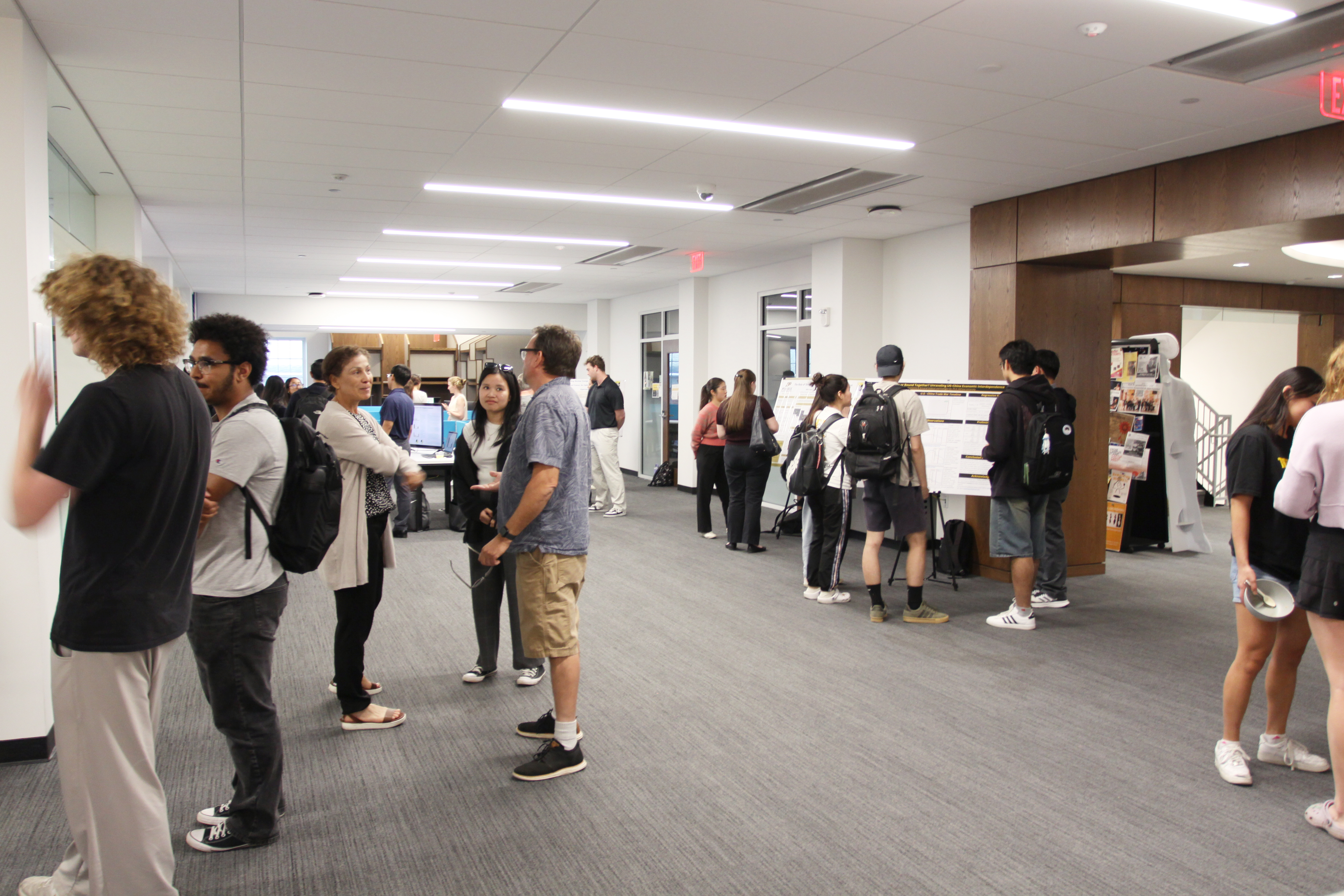
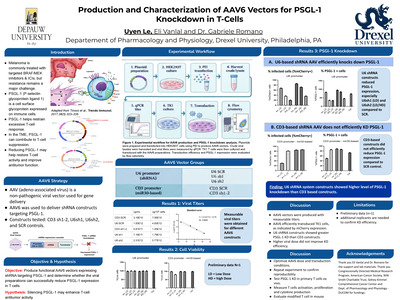
Posters from the annual student research session where DePauw students can demonstrate their collaborative work with faculty or internship experiences.



































































































-

A Highly-Parameterized Ensemble To Play Gin Rummy
Masayuki Nagai, Kavya Shrivastava, Kien Ta, Chad Byers, and Steven Bogaerts
In this work we describe the development and tuning of a computer Gin Rummy player. The system includes three main components to make decisions about drawing cards, discarding, and ending the game, with numerous hyperparameters controlling behavior. After the components are described, three sets of hyperparameter tuning and performance experiments are analyzed.
-

Pattern of health behavior and its association with self-rated health: evidence from the 2018 behavioral risk factor surveillance system in the United States
Linh Nguyen, Mamunur Rashid, and M Mazharul Islam
Physical inactivity, tobacco use, and alcohol consumption are linked with increased morbidity and mortality. To improve public health services, we need to keep policymakers updated with health-related issues. Yet, there are limited numbers of recent research on the combination of those lifestyle behaviors as the determinants of self-rated health (SRH) in the US. Therefore, this study (1) examines the pattern of physical activities, smoking, alcohol consumption, and SRH, and (2) investigates the association between the behaviors and SRH status among US citizens. We extracted data from the latest state-based survey of the 2018 Behavioral Risk Factor Surveillance System (BRFSS), which provides a nationally representative sample of 437,436 American adults. We analyzed the data mainly employing chi-square tests and logistic regression models. Results indicate that physical inactivity and smoking are more common among participants with lower education and household income. Normal-weight individuals or those with higher education and income level are associated with drinking and optimal SRH. Younger ages smoke and report optimal SRH more often, whereas older adults tend to be more physically inactive. Women and people with chronic diseases tend to be less physically inactive, drink, and report optimal SRH than those in the same categories. Optimal SRH is less common among people who smoke and are physically inactive. People who have at least one drink monthly report optimal SRH more often than those who do not. We encourage policy formulators to maintain the public space, increase taxes on tobacco products, and make educational campaigns targeting the youth.
-

Hsa-miR-4520-2-3p: A Potential Modulator of COVID-related ACE2
Molly Ruggles and Nipun Chopra
ACE2 is a transmembrane receptor located in cells in various tissues around the body. Its normal role is the conversion of Angiotensin II to Angiotensin 1-7 leading to vasodilation and a subsequent reduction in blood pressure via the renin-angiotensin-aldosterone system. ACE2 also plays a pivotal role in the infection of COVID-19 as it determines entry of virus into human cells. SARS-CoV-2 uses one of its four structural proteins, the spike (S) glycoprotein, to bind to the ACE2 receptor. This entry into the cell begins the process of infection and spread of the disease; because of the abundance of ACE2 throughout the body, viruses are able to enter a number of different organs. This multi-cell-entry via ACE2 is why COVID-19 affects multiple organ systems in the human body. Currently, therapies targeting ACE2 expression are limited. MicroRNA (miRNA)s are short non-coding RNA that downregulate the expression of a variety of proteins, and therefore offer a mechanism by which to inhibit the expression of ACE2. MiRNAs can potentially downregulate ACE2 protein synthesis by binding to the mRNA of ACE2 at a seed sequence. This binding results in mRNA degradation or inhibition of translation. Thus, our goal was to identify miRNA that may potentially target and downregulate ACE2. TargetScan, DIANA-MicroT, and PicTar are three algorithms that predict miRNAs that can bind to the mRNA of ACE2 and downregulate its expression. Together, the prediction tools resulted in 57 shared human miRNAs that target ACE2. We then utilized self-defined parameters to narrow down our list and identified hsa-miR-4520-2-3p as our predicted miRNA to target ACE2. This miRNA will be experimentally verified in the future.
Supervisor: Prof Nipun Chopra, PhD
-

Mapping Disparities in COVID-19: Determining the Demographic, Economic, Educational, Housing, Quality of Life, and Health Factors that Relate to Disparities in COVID-19 infections and Deaths
Kate Stanley and Naima Shifa
Background: Throughout the pandemic, minority groups, particularly African Americans and Hispanic/Latino Americans have experienced disproportionately high infection and death rates as compared to their white and Asian counterparts. Though this phenomenon could be attributed to high rates of pre-existing conditions in black and Hispanic communities, there are other underlying factors that cause such disparity. We set out to determine whether or not various demographic, economic, educational, health, housing, and quality of life indicators were correlated with higher rates of COVID-19 infection.
Methods: We used USAFacts COVID-19 data to select the 150 United States counties with the highest infection rates. We then collected a series of data, courtesy of the U.S. Census Bureau, for each of those counties. While useful, county-level analysis failed to reveal inequality within counties (i.e. low-income areas nested inside a high-income county). In order to further understand minority health, we used Policy Map to collect a series of data for Chicago and New York City, and performed zip-code level analyses for each city. In order to explore societal indicators of minority health, we used descriptive statistics and statistical t-tests to compare the counties and zip codes with the highest white population to the counties and zip codes with the highest percentages of African Americans and Hispanic Americans. Finally, we created a series of scatterplots, studying the correlation between zip code level variables and COVID-19 infection rates.
Results: Compared to the predominantly white counties and zip codes, areas with higher rates of African Americans and Hispanics demonstrated lower income levels, lower educational attainment, higher rates of certain pre-existing conditions (namely obesity and diabetes), lower rates of flu vaccination, lower self-rated health, lower insurance coverage, and minimal physical activity. Furthermore, larger household size, lower rates of yearly doctor’s visits, homeownership, and computer/internet access, and higher rates of unemployment, multiple jobholders, and public transport use were all related to higher COVID-19 rates among minority communities.
Discussion: Underlying economic, educational, housing, and quality of life factors are associated with higher rates of COVID-19. Mitigating these underlying social determinants of disease could improve the health of minority groups disproportionately affected by COVID-19. Future research can work to further understand how these social indicators cause disease and should seek to uncover potential interventions to address these disparities.
-

Visualizing Income Distribution in the United States
Sang T. Truong and Humberto Barreto
Background: Visit https://sites.google.com/depauw.edu/incomedistributionviz/home to see a novel, eye-catching visual display of the income distribution in the United States that conveys fundamental information about the evolution and current level of income inequality to a wide audience. We use IPUMS CPS data to create household income deciles adjusted for price level and household size for each of the 50 states and the District of Columbia from 1976 to 2018. We adjust for state price differences from 2008 to 2018. Plotting these data gives a 3D chart that provides a startling picture of income differences within and across states over time. Those interested in further customization can use our Python visualization toolbox, incomevis, available at pypi.org/project/incomevis.
-

Ultra-high vibrational and rotational motion of the HF molecule via Infrared (IR) laser excitation
Toria Tucker, Jingwei (Mike) Ling, and Bridget Gourley
Our goals this summer were to build on previous work in our group modeling ultra-high vibrational and rotational excitation in small molecules via unique pulse sequencing of an infrared (IR) laser. The system was modeled both using Fortran and Mathematica as programming languages. We were able to demonstrate that different numerical techniques for propagating coupled differential equations forward in time led to equivalent levels of vibrational excitation and allowed for identical visualization of molecular state probabilities as a function of time. Work including the rotational motion progressed to the point of being able to see both significant excitation when rotations are included as well as leaking into neighboring rotational states as expected. Much work remains to be done before a full analysis of the rotational excitation can be completed.
-

Effects of Mono- and Di- Saccharide Osmolytes on the Stability and Folding Dynamics of src SH3
Mahmoud Abouelkheir and Emily Guinn
Osmolytes are small molecules that stabilize protein’s native structures in living systems. In order to better understand this process, we investigate how changes in specific structural properties of osmolytes affect folding dynamics and stability of proteins. This study focuses on one common structural property that varies in quantity, linkage, and arrangement amongst some osmolytes: glucose subunits. Comparing the effects of osmolytes with varying quantities of cyclic glucose subunits, varying types of glycosidic linkages of cyclic glucose subunits, and a linear glucose analogue on the stability and folding dynamics of proteins may reveal the potential role of these structures on osmolyte-protein interactions. We characterize the effects of mono- and di-saccharide osmolytes on the stability and folding kinetics of the srcSH3 model protein using sorbitol, glucose, and maltose solutions with chemical denaturant.
-

Mass Cytometry Immune Profiling of T1D Patients
Layla Ahmadi
Type 1 diabetes mellitus (T1D) is an autoimmune condition in which pancreatic islet cells are mistaken for foreign invaders and killed by T cells. B lymphocytes present autoantigens to T lymphocytes, activating them. Islet cells are responsible for the production of insulin, which is used to maintain glucose homeostasis. Hence, those with T1D present with severe hyperglycemia accompanied by polydipsia, polyphagia, and polyuria at diagnosis. The condition is chronic and incurable, affecting over 1.25 million Americans. If the condition is not well managed, patients face complications such as blindness, amputation, diabetic neuropathy, and cardiovascular disease. Currently, there is limited understanding of the risk for onset of T1D and the development of the disorder. We hypothesize that there are differences in the frequency and activation status of autoimmune-prone B and T lymphocyte subsets present in T1D patients, and that these can be identified among recirculating peripheral blood monocytes. Our goal is to compare the circulating immune profiles of T1D patients to healthy controls using mass cytometry in conjunction with cutting-edge unsupervised analysis algorithms to establish each patient’s immunophenotype. Populations and frequencies of live white blood cells in patients with T1D from the T1D Exchange living biobank (n=29) will be analyzed in comparison to healthy donors (n=9). The analysis of the differences in immunophenotype in those with T1D aims to elucidate potential pharmacological targets to implement mechanisms for the prevention of T1D.
-

Does Urbanization Drive Evolution in White Clover?
Victor Alfonso, Seika Shiba, Yangjie Tan, and Philips Akinwole
Urban areas are functioning ecosystems with profound effects on the ecology and evolution of organisms. Systematic investigations of species interactions in urban versus rural environments can improve our understanding of the mechanisms through which urbanization drives natural selection on populations. To facilitate our understanding of the selective factors driving adaptation in cities, we examined adaptive phenotypic changes by quantifying the relative frequency of cyanogenesis (hydrogen cyanide production after tissue damage) in 180 white clover (Trifolium repens) populations along urbanization gradients in six Midwest (USA) cities. White clover, a perennial plant is naturally polymorphic for cyanogenesis; a chemical defense against herbivores. We found that the frequency of cyanogenic plants within populations decreased towards the urban centers in three of six cities, but no consistent pattern in genetic diversity in three cities. The population density strongly predicted the average cyanogenic frequencies across Midwest cities. Our study supports the notion that insect herbivory is higher in rural environments, hence, higher frequency of cyanogenesis in rural area indicated a defense mechanism against herbivores. Nonetheless, our findings partly illustrate the complex nature of urbanization effects on plant‐herbivore interactions which requires accounting for direct or indirect mechanisms involving other biotic or abiotic factors. We suggest that plant populations are adapting to urbanization gradients, but more studies are needed to assess whether the capacity of this species to adapt to urban ecosystems is a general phenomenon.
-
Synthesis and Characterization of silver complexes of mercaptosuccinic acid in aqueous and ionic liquid solvents
Mohamed Berbich and Gina Federighi
A procedure to synthesize silver complexes of mercaptosuccinic acid in an ionic liquid solvent was developed based on the literature synthesis of similar complexes in aqueous solution (Nomiya et.al). We successfully synthesized crystalline product using both water and ionic liquids as solvents. Modifications to the synthesis resulted in the formation of pure yellow crystals, and they were analyzed by infrared and nuclear magnetic resonance spectroscopy. Ethylammonium nitrate (EAN), an ionic compound that is liquid at room temperature, provided a different reaction environment from the aqueous solution reaction, resulting in a different coordination complex. The EAN system resulted in a lighter yellow product, with more limited solubility in water. Crystallography and elemental analysis are planned this fall to confirm the structures.
-
Adamts6 Function is Crucial for Skeletal Development in Mice
Morgan Black
ADAMTS (A Disintegrin-like and Metalloproteinase with Thrombospondin type 1 motifs) proteins are secreted, extracellular matrix (ECM)-associated metalloproteinases. There are 19 ADAMTS protein-coding genes in mammals. Among them is Adamts6, which is often referred to as an orphan enzyme. Interestingly, the Adamts6 mutant mice generated in our laboratory are associated with craniofacial and heart defects as well as significant skeletal anomalies. In this study, we attempted to uncover the molecular and cellular mechanisms underlying the morphological defects by examining the patterns of expression of known molecular markers of cartilage and bone development. We found that the skeletal developmental defects in Adamts6 mutant mouse embryos were associated with impairment of regional cell proliferation and differentiation.
-

The Best Studied Crab in Astronomy: Searching for Variability in VHE Emission from the Crab Nebula
Christina Bourantas, Kate Cowger, and Avery Archer
The Crab Nebula is the remnant of a powerful stellar explosion first observed in 1054 AD and has been extremely well studied for decades. previous very high energy (VHE); GeV) studies have observed no variability in the nebula flux making the Crab a standard reference tool for gamma-ray telescopes. As part of the VERITAS (Very Energetic Radiation Imaging Telescope Array System) collaboration, we continue monitoring the nebula’s flux to understand the VERITAS telescopes and physical processes occurring within the nebula. We are analyzing over 80 hours of data from 2017 and 2018 from VERITAS Collaboration, developing and adding to a light curve that includes data since 2007. Our analysis of the 2017-2018 combined dataset determined a spectral index of -2.324 plus or minus 0.005489 and fitting the light curve with a constant function yields a mean integrated flux above 200 GeV of, which is significantly lower than a 2007-2016 dataset.
-
Osmolyte Impact on Surfactant Bound Water Nanodroplets
Luke Brake and David Cordero
To investigate the impact of osmolytes on surfactant bound water nanodroplets, we studied reverse micelle systems involving anionic surfactant docusate sodium (AOT). David’s project focused on the effects of saccharide structure on reverse micelle stability as temperature decreased. David compared the effects of using glucose anhydride (the closed-form of glucose) and sorbitol (the open-chain form of glucose) in the reverse micelle system with varying concentrations of each. Using a temperature- dependent UV-vis spectrophotometer, the temperature of the AOT reverse micelles were decreased, and the stability of the reverse micelle systems were observed UV absorption. The data collected indicated that the stability of the reverse micelle system did appear to remain relatively more stable at some specific concentrations of saccharides, but structure of the saccharide did not appear to have a conclusive effect on the stability of the system. At the same time, Luke’s project centered on comparing systems with different polar molecules in the core. Luke compared reverse micelles containing formamide, N-methylformamide, and N,N-dimethylformamide. The data collected from UV-Vis absorption of methyl orange dye was used to determine the impact of the addition of formamide and its derivatives to the polar core. The data collected shows patterns of peak narrowing toward a higher energy level as the amount of water in the system decreases.
-

WWOOFing in Northern Europe: a Cross-Cultural Examination of Food, Farming, and Community
Seth Brawner
Industrial agriculture has changed the way Americans eat food. More food is available but many eat without knowing where the food came from, or the additives that were used to grow and preserve it. The implementation of this large-scale food system has caused many health issues among the American population. Large-scale agriculture systems, being primarily monocultures, are also the cause of many environmental problems affecting the United States such as deforestation, soil erosion, and the eutrophication of waterways. Small-scale, organic agriculture has the potential to combat these environmental issues while restoring local, more transparent food systems. This summer I spent two months in northern Europe working on two small- scale organic farms in the Netherlands and Norway. My goal was to learn about the small organic farm movement and food culture in places that were far from home so that I could compare the two region’s and America’s general philosophies regarding agriculture and food. This experience helped me to make connections between land stewardship and agricultural production firsthand.
-
The Effect of Osmolytes on Protein Folding
Ellie Carlson and Quan Khuc
Protein function is determined by the way that it folds. By studying how a protein folds we are able to examine how a protein interacts with its normal and abnormal environment. Because of the many different environmental conditions that exist within our bodies, proteins have developed a way to counteract stress conditions that may result in misfolding. This mechanism is the consumption of osmolytes. Osmolytes are known to stabilize protein structure so that aggregation or other consequences of misfolding do not occur. Although research has been done to show that osmolytes are stabilizing proteins, there are many ambiguities regarding the mechanisms of stabilization in terms of protein kinetics and thermodynamics. Therefore, we hypothesized that osmolytes help cells adapt to stress conditions by altering protein energy landscapes to prevent aggregation. Osmolytes are small organic solutes produced by cells in high stress situations to stabilize their macromolecules. In this study, we studied the effects of osmolytes on the rate of protein folding with chosen denaturant GdmCl and osmolyte Glycine Betaine (GB). A single domain protein SH3 was chosen because of its simple folding mechanism, which only has two steps – the least number of steps that protein folding process undertakes. Buffers were made with an increasing concentration of GB, starting with 1M GB, to stimulate different environments in which the designated protein unfolds and refolds. The results show that increasing concentration of GB in buffers helps to stabilize the protein. The cause of this behavior might include the crowding effect between GB and the protein and the effect of charges on GB. The crowding effect reduces spaces for protein to unfold. The charge effect potentially stabilizes charges on the protein. The results obtained in this study open new directions for future research into how concentration of osmolytes affects the rate of protein folding.
-
Examination of the effect of a Histidine tag and pH on the energy landscape of ACBP
Karson Cecil and Papa Kobina Van Dyck
A polyhistidine-tag is an amino acid motif in proteins that consists of at least six histidine (His) residues, often at the N- or C-terminus of the protein. While a 6 Histidine residue tag has multiple functions, it is often attached to the end of a protein for use in protein purification. It is important to determine if the His-tag has an effect on protein folding and stability. We use ACBP as our model because ACBP is a single-domain protein that is thought to fold in a two-state process. To characterize how the His-tag affects the protein energy landscape, we study the effects of ACBP stability and folding kinetics with and without a His-tag in different buffers with varying pHs of 5.3 and 7. At a pH of 5.3 Histidine is protonated and at 7 Histidine is deprotonated. We observed that there was a significant difference in the kinetics and thermodynamics of the C- Term His tagged ACBP. In a pH of 5.3, the C-Term His tagged ACBP was less stable whereas in a pH of 7 it was more stable. There was no significant difference in the thermodynamics or the kinetics of the N-term ACBP and the wild type ACBP.
-
Social Impacts through Environmentalism
Peng Cheng
Social impacts should not be merely planned, but implemented. Promotion of environmentalism plays a crucial part in environment conservation — the incorporation of such information and knowledge into the societal system can induce efficacious social changes. Over the past summer, I interned with Thirst, an NGO founded in Australia and based in Hong Kong, and worked to promote environmentalism through classroom lecture and discussion at elementary schools and middle schools, social events such as art gallery opening, and conservation program for endangered species. Our office also collaborated with real estate corporations and automobile companies and coordinated events such as RunningDry.
-
Acyl Substitution/Epoxide Opening Reaction
Xi Chen and Rebecca Derringer
Organic chemistry is a subdiscipline of chemistry that studies the structure, properties and reactions of organic compounds, which contain carbon in covalent bonding. In organic chemistry, we mostly study the elements of carbon, hydrogen, nitrogen and oxygen. This summer research we mainly focused on an area of organic chemistry called synthesis. In organic synthesis chemists build molecules which have a wide variety of potential uses. We specifically worked on building molecules from an epoxide molecule previously made by the Hansen group. From this molecule we used two different bases in an attempt to make two different products. Products are identified by using NMR spectroscopy. Once made the biological activity of the compounds will be determined using the brine shrimp lethality assay.
-
Assessing Tree Canopy Complexity in Northern Hardwood Forests
Sarah Congress
The composition and complexity of a forest’s canopy influences ecosystem functioning within the forest. Long-term Successional changes as well as short-term disturbance events and anthropogenic changes can cause canopy complexity to fluctuate over time. Ground-based LiDAR systems are being employed to gain a more in-depth understanding of the complexity of forest canopies. This study used a combination of ground-based LiDAR mapping and field-based data collection to begin to quantify the complexity of the forest canopy for northern hardwood forests. This study found that the successional stage of the forest was a driver of the differences in canopy composition and vegetation area index, but that fertilization treatments did not strongly affect canopy structure.
-

Bisexual Youth: Negative Health Outcomes in the United States
Ashley Dapore and Naima Shifa
Research over the past fifty years has suggested that although many legal and social changes have occurred in favor of LGBTQ individuals, members of this community still experience unfavorable mental health outcomes more frequently than their straight peers. Especially for bisexual teenagers, their social environment and response to risk behavior, including suicidal thoughts, is alarming in many states. An unwelcoming or unaccepting social and political environment surrounding them as they age may have a direct negative impact on their physical safety and mental health in victimization experiences such as bullying and the development of depression. We analyzed the Youth Risk Behavior Survey (YRBS) data collected by the Centers for Disease Control and Prevention (CDC) from high school students in twenty-four states to determine the rates of victimization of each sexual minority group. In seven of nine victimization experiences, bisexual youth had the highest prevalence of negative outcomes. Multiple Decision-Making Criteria was used to create a ranking of the best and worst states for positive outcomes for bisexual youth.
-

Short Chain Fatty Acid -butyrate Anti- IL-1 β Induced Intestinal Inflammation by Regulating the Intestinal Barrier Function Related Genes in Neonatal Mice
Brittany Davis
Necrotizing Enterocolitis (NEC) is a disease that causes excessive inflammatory necrosis within the intestines. It affects 10% of premature infants weighing under 1500 grams, and leads to increased morbidity and mortality, causing extensive expenditure of healthcare dollars. This disease triggers devastatingly painful symptoms within infants. Recent studies have shown that feeding infants breast milk rather than formula milk can help alleviate the painful inflammation of this disease.1 Moreover, supplementing a mother’s breast milk with probiotics has been shown to enhance this anti-inflammatory effect. Currently, the focus towards ameliorating NEC disease lies within determining the underlying mechanism of these findings. Seeing that short chain fatty acids (SCFAs) are a metabolite of breast milk, and have proven to help decrease inflammation within extant literature,2 this study focuses on the anti-inflammatory effects of short chain fatty acid-butyrate within the intestines of neonatal mice. Specifically, we used quantitative reverse transcription PCR (RT-qPCR) to explore the relationship between short chain fatty acid butyrate and intestinal barrier function genes. Intestinal genes were isolated and amplified from neonatal mice in order to perform gene analysis through transcription profiling. Preliminary results suggest potential relationships between anti-inflammatory effects of short chain fatty acid butyrate and increased expression of Olcn, Cldn4, Muc1, Muc2, Casp3, and Casp8 genes. If these findings can be replicated in human intestinal cells, further understanding gene regulation can ultimately provide more effective and efficient treatment to neonatal infants. [1] Gregory, K. E., Samuel, B. S., Houghteling, P., Shan, G., Ausubel, F. M., Sadreyev, R. I., & Walker, W. A. (2016, December 30). Influence of maternal breast milk ingestion on acquisition of the intestinal microbiome in preterm infants. Retrieved from https://www.ncbi.nlm.nih.gov/pubmed/28034306 2 Meng D, Zhu W, Shi HN, Lu L, Wijendran V, Xu W, Walker WA. The toll-like receptor - 4 in human and mouse colonic epithelium is developmentally regulated: a possible role in necrotizing enterocolits. Pediatr Res; 77,416-24 (2015).
-

Exploring Student Experiences in Science & Math to Address Underrepresentation in STEM
Brittany Davis, Hira Ahmad, Berenice Contreras, Krista Kaleel, and Sydney Majka
According to a 2018 publication by Higher Education Today, millions of dollars have been invested in recent years to promote diversity in science. Yet still, domestic students of color and first generation students are persisting in STEM at a lower rate than that of their similarly interested white or non-first-generation counterparts (Witham, Malcom-Piqueux, Dowd, & Bensimon, 2015). This state of underrepresentation is mirrored at our own university. To learn more about students’ experiences, we conducted a survey to gather insight on the experiences of first generation students, international students, and domestic students of color in science and math classes at DePauw. Our initial findings have shown that classroom climate, teaching styles, and peer relationships all affect the degree to which students negatively or positively evaluate their classroom experiences, and ultimately their decision to persist with or leave STEM departments.
-
Mutagenicity of C8-Adenine DNA Adduct from the Environmental Carcinogen 6-Nitrochrysene in Escherichia coli and the Role of SOS Response in Mutagenesis
Gina Federighi
DNA is subjected to damage by a variety of exogenous and endogenous chemicals. If these damages are not repaired by DNA repair pathways before DNA replication occurs, these damages can cause mutations. These mutations have the potential to alter a cells life and function, which in some instances, is the initiation phase to the onset of cancer. 6-nitrochrysene (6-NC) is a known carcinogen found in gasoline and exhaust that can be metabolically activated in human cells to cause DNA damage. Cells are equipped with repair pathways that aid in bypassing or repairing damages of the DNA; E. coli responds to DNA damage by inducing the SOS response. The SOS response activates SOS genes that are involved in multiple DNA metabolism processes. The production of translesion synthesis (TLS) polymerases increases with the induction of the SOS Response which aid in bypassing DNA lesions in E. coli. This research studies the importance of the SOS Response in E. coli when the environmental carcinogen 6-NC forms a C8-adenine lesion site in the p53 tumor suppressor gene. Research found that when the SOS response was induced in E. coli, there was an increase in both survivability and number of mutations compared to the wild type cells studied. These results can be attributed to the increased production of low fidelity TLS polymerases with the induction of the SOS Response. Further work will include studying the role of specific TLS polymerases in bypassing the C8-Adenine adduct derived from 6-NC.
-
Trained but In-Senescent: Characterization of Alveolar Macrophages in Trained Immunity
Anna Foley
Alveolar Macrophages are the present in large quantities within airways and are necessary for maintaining homeostasis as well as helping initiate different types of inflammatory responses. These macrophages are necessary for protecting against acute respiratory infections such as Influenza, but have also been linked to processes promoting post infection inflammation. In addition, research has shown how multiple incidences of acute lung viral infections may aid in driving the development of chronic lung fibrosis. In this project, we investigated characteristics of highly upregulated genes SPP1 and IL-1β shown in mice memory-phenotype alveolar macrophages. In addition, we investigated gene markers of senescent cells such as p16, p21 and proliferation in these macrophages. Alveolar macrophages showed an increase in SPP1 and IL-1β expression and protein concentration in the PR8 influenza memory treatment. In addition, although the memory macrophages showed increase in p16 and p21 expression, there was no significant decrease in cell proliferation, showing that these cells are non-senescent like.
-
Nicotine-Seeking Behavior in Zebrafish
Kaitlyn Gardner, Sabrina Krause, Andrew Tucker, and Lauren White
The ultimate goal of our projects is to identify potential new pharmacotherapeutics for the treatment of nicotine dependence, the number one cause of preventable diseases in the U.S. Zebrafish are a stepping stone towards developing better medicines that help people quit smoking and vaping. Larval zebrafish have advantages for studying nicotine response behavior because of their small size, short developmental period, availability of zebrafish mutants, targeted gene-knockout methods, and simple drug- delivery methods. However, mechanisms of nicotine-seeking behavior in zebrafish are unknown. To explore nicotine-seeking behavior in larval zebrafish, we have established behavioral choice assays using a plus-maze and a gradient-maze. Individual larval zebrafish (6 to 8 days after fertilization) were videotaped before and after the start of local delivery of nicotine into a single compartment of a maze. Video tracking analysis using EthovisionXT (Noldus) software was employed to quantify nicotine-seeking behavior by measuring parameters such as the cumulative time larval zebrafish spent in a nicotine-containing compartment and frequency of entering a nicotine-containing compartment. Results of 468 tested larval zebrafish indicate that the assays can be used to distinguish nicotine-seeking from non-seeking larval zebrafish. Nicotine-seeking larval zebrafish occupy nicotine compartments for longer periods and enter the nicotine- containing compartments more frequently compared to non-seekers. About 20% (94 of 468) tested individual larval zebrafish were identified as nicotine-seekers. Patterns of nicotine-seeking behavior vary among identified nicotine-seekers. A color-plus maze, or rainbow maze was employed to explore conditioned place preference testing. Nicotine- seeking larval zebrafish will be raised to adult-hood for future genomic analysis and generation of a new zebrafish line of nicotine-seekers. Studies of a new nicotine-seeker zebrafish line could lead to a better understanding of the genomics and mechanisms of nicotine-seeking behavior in zebrafish and the identification of potential pharmacotherapeutics for smoking cessation therapy.